Fast Facts — Read This First
- A worker died every 104 minutes on the job in the U.S. in 2024, per the Bureau of Labor Statistics.
- Mining, bomb disposal, and hazardous-material handling now rely on robots as standard equipment, not novelty tech.
- Cost — insurance, litigation, and OSHA penalties — drives adoption far more than compassion or PR.
- Confined-space, irregular, and judgment-heavy tasks still resist automation because the capital case rarely pencils out at small scale.
- Robotics-as-a-service and leasing models are closing that gap for mid-sized operators, especially in emerging markets.
A worker died every 104 minutes on the job in the United States in 2024, and dangerous jobs like mining, bomb disposal, and confined-space work still account for a disproportionate share of that toll, according to the Bureau of Labor Statistics. That single statistic explains why robotics investment in hazardous industries has stopped being a safety department talking point and become a budget line finance teams actually approve. The question is no longer whether robots belong in dangerous jobs at all. It’s which dangerous jobs still can’t be handed off, and why.
Where Machines Have Already Taken Over
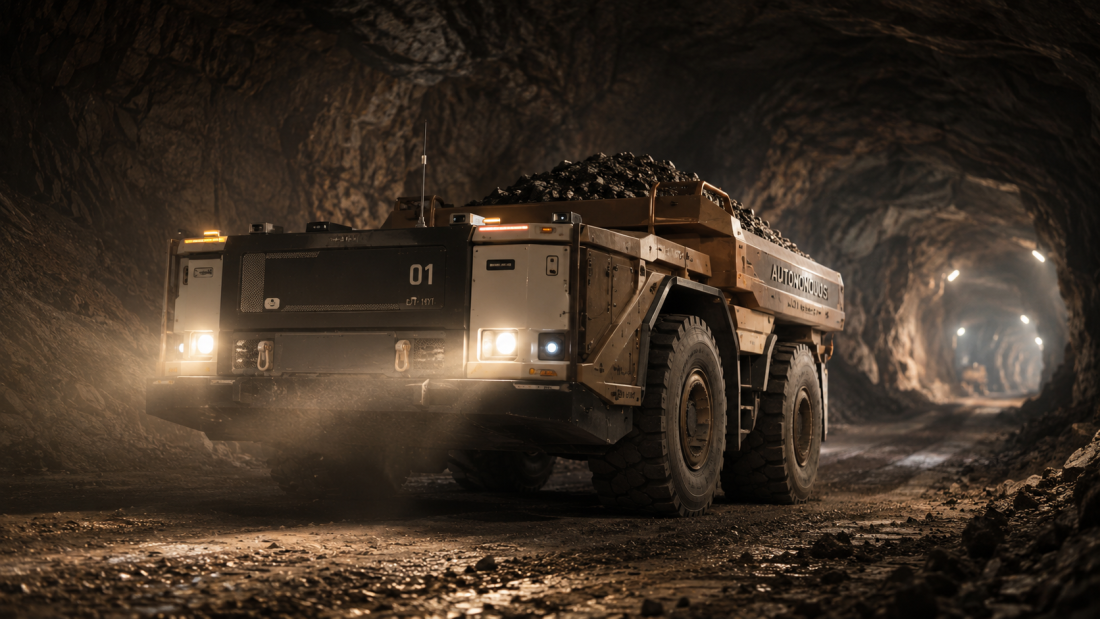
Mining and bomb disposal are the clearest cases of dangerous jobs already ceded to machines. Driverless haul trucks and robotic drills now handle much of the underground work that once put miners directly in harm’s way, and bomb squads worldwide treat robots as standard equipment rather than a novelty, according to Standard Bots. Neither shift happened because a robot felt no fear. It happened because insurers, regulators, and boards priced the alternative and it lost.
“Robots doing dangerous jobs in 2026: where humans step back” is now a category, not a headline — automation has measurably reduced injuries and fatalities across mining, defense, and confined-space work.— Standard Bots, 2026 industry analysis
The International Labor Organization still estimates that millions of workers are injured on the job worldwide every year, but sectors that have adopted robotics report measurable declines in serious accidents, per Standard Bots’ 2026 analysis.
Why Cost, Not Compassion, Drives the Decision
Executives rarely greenlight dangerous jobs robotics because it is the right thing to do, even when it is. They greenlight it because a fatal work injury rate of 9.2 per 100,000 full-time workers in construction, or the equivalent in mining, translates directly into workers’ compensation premiums, OSHA penalties, delayed projects, and litigation exposure. Fear of liability is a stronger procurement driver than desire for efficiency, and buyers who understand that sequence write better robotics business cases than buyers who lead with productivity slides.
9.2
The fatal work injury rate per 100,000 full-time equivalent workers in U.S. construction in 2024 — the second-highest raw death toll of any private industry.Source: U.S. Bureau of Labor Statistics, Census of Fatal Occupational Injuries, 2024
Where Robots Still Can’t Go
Confined-space rescue, irregular demolition, and judgment-heavy inspection work still resist automation, not because no one has tried, but because the return on a purpose-built robot only pencils out at scale. A single-site quarry or a mid-sized contractor tackling dangerous jobs in an emerging market often cannot justify the capital cost that a national mining conglomerate can spread across dozens of pits. That gap is not a technology problem. It is a financing problem, and it is where robotics-as-a-service and defense-style leasing models are starting to compete for a business case dominated so far by direct purchase.
⚠ Fiction — illustrative, not a real eventA mine safety officer in a rural district has spent a decade replacing worn ventilation sensors after near-misses that never made the news. When the operator finally leases a robotic haul-truck fleet, her first reaction isn’t relief about efficiency — it’s the quiet realization that she will stop bracing every time the radio crackles during a shift change.
Global Implications
Dangerous jobs are not evenly distributed globally, and neither is robotics adoption. Mining, oil and gas extraction, and heavy manufacturing carry outsized fatality risk across Nigeria, West Africa, and Southeast Asia, often with less independent safety enforcement than U.S. or EU operations covered by OSHA-equivalent bodies. Robotics-as-a-service and leasing structures matter more in these markets precisely because outright capital purchase is the harder barrier, not appetite for safer operations — a dynamic we track in our analysis of Teleoperated Robots Are a Data Strategy, Not a Stopgap.
💡 CreedTec Analyst’s Note — Daniel Ikechukwu
Strategic Impact: Dangerous jobs robotics adoption tracks liability exposure and insurance economics more tightly than it tracks raw technical capability. Vendors who lead sales conversations with safety statistics outperform vendors who lead with automation buzzwords.
Stop: Evaluating dangerous jobs robotics purchases purely on unit cost against a human wage, ignoring workers’ comp, litigation, and insurance premium offsets.
Start: Requesting a liability-adjusted ROI model from vendors, not just a productivity comparison, as covered in our analysis of Unitree’s Time Cover Hides a 9% Industrial Deployment Problem.
Watch: Whether robotics-as-a-service and leasing models expand access for mid-sized operators in emerging markets who cannot justify outright capital purchase, a trend also visible in our coverage of Virtuix’s Tesla Optimus Teleoperation Deal.
ROI Outlook: Buyers weighing dangerous jobs robotics purchases should model total liability cost, not headcount cost alone — the payback period shortens considerably once insurance and litigation exposure are priced in, a distinction we also examine in Humanoid Robots Nonstop in Package Testing: The Labor Model Is Already Broken.
Dangerous jobs will not disappear from the global economy this decade. But the workers still doing them are increasingly the ones a robot genuinely cannot yet replace — and buyers who understand exactly why will make sharper capital decisions than buyers chasing a headline.
FAQs
Which dangerous jobs have robots replaced fastest?
Mining haulage, bomb disposal, and hazardous-material handling show the fastest adoption, largely because the tasks are structured and the liability savings are easiest to quantify.
Why hasn’t automation eliminated dangerous jobs entirely?
Confined-space, irregular, and judgment-heavy tasks still resist purpose-built automation, and the capital cost often only justifies itself at large operational scale.
Do robots in dangerous jobs actually reduce workplace deaths?
Sectors that have adopted robotics report measurable declines in serious accidents, according to Standard Bots’ 2026 industry analysis, though total figures still depend heavily on enforcement and reporting quality by region.
What does it cost a mid-sized operator to deploy dangerous-jobs robotics?
Costs vary widely by task, but robotics-as-a-service and leasing structures are emerging specifically because outright capital purchase remains the primary barrier for smaller operators, not the technology itself.
Are dangerous jobs disappearing because of robots or because of labor shortages?
Both forces are compounding each other — hazardous roles are already hard to staff, and that scarcity is accelerating capital approval for automation that might otherwise take years to justify.
Should a manufacturer prioritize safety ROI or productivity ROI when evaluating dangerous-jobs robotics?
Liability-adjusted safety ROI should anchor the business case first; productivity gains are real but rarely the reason boards approve the capital in high-fatality-rate sectors.
Independent robotics deployment analysis, twice a week.
Verified data before the vendor pitch becomes your safety budget. Subscribe to CreedTec.
Sources
- U.S. Bureau of Labor Statistics — Census of Fatal Occupational Injuries, 2024
- Standard Bots — Robots Doing Dangerous Jobs in 2026
- NIOSH / CDC — Safe Operations of Construction Robots research
- Construction Dive — 2024 construction fatality analysis