Fast Facts
Legacy equipment integration gets blamed on old machines, but the real cost driver is missing documentation: undocumented controllers, lost schematics, and unrecorded modifications. A greenfield smart factory costs roughly 200 times more than a brownfield retrofit, yet over half of manufacturers still call integration their top digitalization barrier. The equipment isn’t the obstacle. Not knowing what’s inside it is.
Legacy equipment integration is a documentation problem wearing an engineering costume. Manufacturers routinely treat the age of a machine as the reason integration projects stall, when the actual blocker is almost always the same: missing schematics, undocumented controllers, and signal maps nobody wrote down before the engineer who understood the system retired. In auto manufacturing, a greenfield smart factory setup costs an estimated $1 billion to $1.3 billion — roughly 200 times as much as retrofitting an existing brownfield plant, according to IIoT World. That cost gap should make the decision automatic. It doesn’t, because the retrofit path has a different kind of risk baked in: nobody fully knows what they’re retrofitting until they open the panel.
Why Legacy Equipment Integration Fails on Paperwork, Not Hardware
50%+of manufacturers identify OT/IT integration as a primary barrier to digitalization — not equipment age, not budget, but the difficulty of connecting operational technology to information systems.
Source: Capgemini Research Institute, cited by InTechHouse, 2026
Legacy industrial equipment resists connection for three intertwined reasons: it speaks proprietary or outdated protocols modern systems don’t understand, it was built assuming physical isolation rather than any security model, and its operational lifespan runs decades rather than years, according to Wirtek’s analysis of brownfield integration. None of those three reasons is really about the machine’s age. They’re about the absence of a paper trail describing what the machine does and how it talks. See our earlier coverage of Schneider’s channel-training bet in Nigeria’s industrial tech market, where the same documentation gap shapes which vendor gets chosen to fill it.
“A company can’t just tear down all of its facilities and start from scratch.”— René Blaschke, IIoT Brownfield Integration Expert, B&R Industrial Automation
The Tier System That Actually Predicts Project Cost
One veteran industrial automation consultant, with 36 years connecting factory machines, classifies every piece of equipment into one of four connectivity tiers before quoting a project — because the cost and time per machine differ by roughly a factor of ten between the easiest and hardest tier, according to SYMESTIC. Getting that classification right upfront is the difference between a project finishing on schedule and one running six months long. In Europe in 2026, roughly 80% of factory machines still fall outside the easiest, modern OPC UA-capable tier — meaning the harder categories aren’t the exception in legacy equipment integration. They’re the baseline.
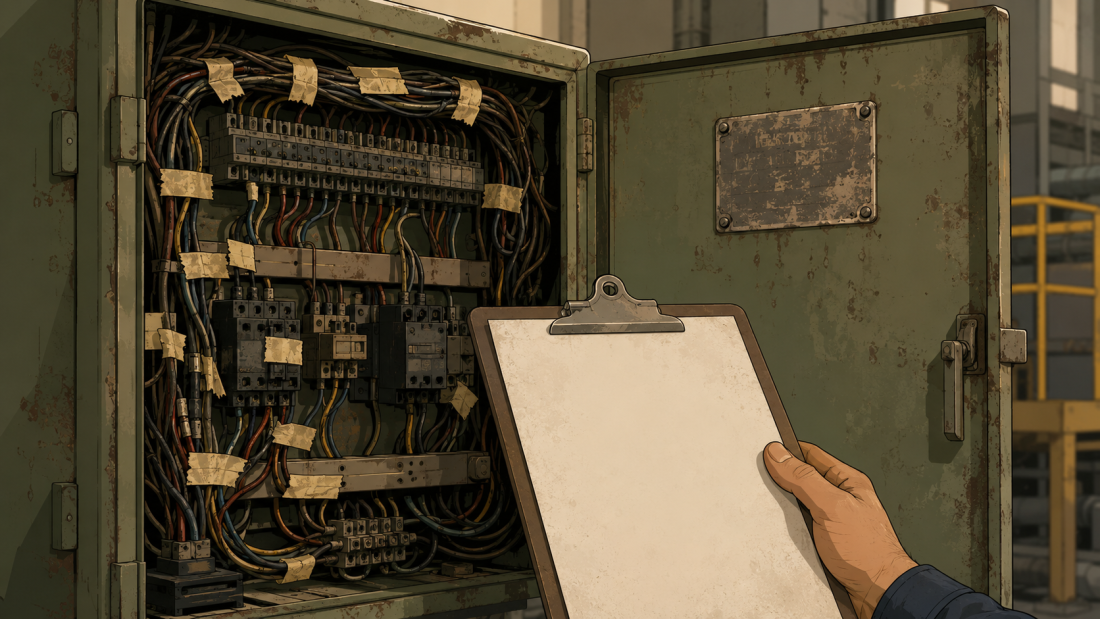
That reframes the fear driving so many delayed retrofit decisions. It isn’t fear of the machine failing. It’s fear of discovering, mid-project, that a controller has no documentation at all — a closed or outdated system with missing schematics and no memory map, forcing the integration team into reverse-engineering territory nobody budgeted time or money for.
⚠ Fiction — composite scenario, not a real event: A plant manager approves a two-week retrofit budget for a 1990s-era conveyor PLC. Week one, the integration team discovers the original schematics were lost in an office move a decade earlier, and the controller’s memory map has to be reverse-engineered pin by pin. The two-week project becomes a seven-week one — not because the conveyor changed, but because nobody had written down what it was doing in the first place.
Global Implications
The IEC published dedicated brownfield security guidance, IEC PAS 62443-1-6, in 2025 — a direct acknowledgment that legacy equipment integration now carries a cybersecurity dimension regulators expect manufacturers to formally address, not just an engineering one. McKinsey estimates the Internet of Things could generate up to $12.5 trillion in value globally by 2030, with factories alone accounting for up to $3.3 trillion of that — just over a quarter of the total — yet McKinsey’s own analysis points to interoperability and cybersecurity, not raw technical capability, as the deciding factor in whether projects scale past a pilot.
For manufacturers in Nigeria, West Africa, and Southeast Asia, this documentation gap often runs deeper than in facilities built more recently: equipment purchased secondhand, modified informally over years without records, or inherited from a previous operator with incomplete handover documentation. That makes the tier-classification step even more valuable here than in newer markets — spending a week properly documenting a legacy system before quoting a retrofit price is cheaper than discovering the gaps mid-project. See our coverage of unified namespace architecture for manufacturers for how that same documentation discipline pays off once data actually starts flowing.
💡 CreedTec Analyst’s Note — Daniel Ikechukwu
Strategic Impact: Legacy equipment integration budgets fail most often because they price the machine, not the paperwork gap around it. Documentation quality, not equipment age, is the variable that actually predicts project cost and timeline.
Stop: Quoting retrofit projects based on equipment age or make/model alone, without a documentation audit first.
Start: Running a connectivity-tier classification pass across your equipment fleet before budgeting any integration project, to separate genuinely simple retrofits from ones requiring reverse-engineering.
Watch: Whether IEC PAS 62443-1-6 adoption becomes a de facto requirement for insurers or auditors evaluating brownfield cybersecurity posture.
ROI Outlook: A brownfield smart-factory pilot typically costs $50,000 to $500,000 for 10-20 assets, with ROI often visible within 45 to 90 days — but only when the documentation gap is priced in upfront rather than discovered mid-project, where it routinely doubles or triples both cost and timeline.
Nobody budgets for the meeting where the retrofit team admits nobody knows what’s actually inside the panel. That meeting happens on almost every legacy equipment integration project anyway — the only choice is whether it happens before the quote or after the invoice.
Subscribe to CreedTec’s newsletter — it tracks which legacy equipment integration vendors actually audit documentation first, and which ones just quote by equipment age and hope for the best.
Sources
- Wirtek — brownfield integration analysis and McKinsey IoT value estimates
- SYMESTIC — connectivity tier classification system
- IIoT World — greenfield vs. brownfield cost comparison
- InTechHouse — Capgemini OT/IT integration barrier statistic
- iFactory — brownfield pilot cost and ROI timeline data
Further reading: Schneider’s Real Bet on Nigeria’s Industrial Tech Market · Unified Namespace Explained for Manufacturers · The Dark Data IIoT Opportunity · Industrial IoT Architecture ROI Frameworks 2026 · The Audit-Driven IIoT Adoption Crisis