Fast Facts
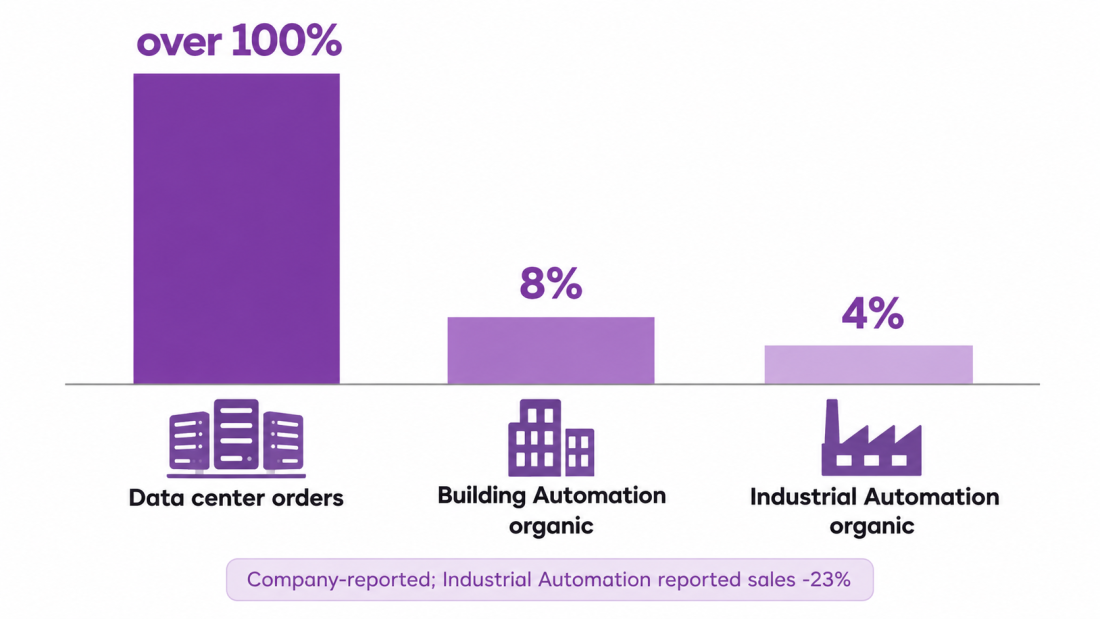
The Honeywell Q3 results, reported October 22, show where AI-era money is landing. Honeywell (NASDAQ: HON) said data center orders rose more than 100% and raised full-year sales guidance to $20.0 billion to $20.1 billion. Revenue was $4.99 billion, up 1% and slightly below consensus, with organic sales up 7%.
The detail matters more than the headline. Industrial Automation, the segment closest to factory floors, grew only 4% organically, and its reported sales fell 23% on divestitures and deferred utility meter deployments. Growth is coming from data centers and energy projects, not from discrete factory automation.
Honeywell’s third quarter was its first since spinning off aerospace in late June, which makes it a clean read on a company now pitched around industrial automation “in the era of physical AI,” per Manufacturing Dive. The Honeywell Q3 results beat on profit and guidance. They also separate two stories that are often blurred: AI-driven infrastructure demand, and factory-floor automation demand.
What the Honeywell Q3 Results Show
Adjusted EPS rose 34% to $2.27 against a $2.17 consensus, per Zacks, and segment margin rose to 21.3% from 17.6%. Backlog reached about $19 billion, up 7% excluding divested businesses, and short-cycle orders grew 8%. Process Automation and Technology sales rose 16% to $1.86 billion, or 8% organically, and Building Automation rose 8% to $2.02 billion.
The data center number comes from CEO Vimal Kapur’s call remarks as reported by Manufacturing Dive, so treat it as a company statement. Process technology orders also topped $1 billion since the first quarter, tied to energy projects in North America, the Middle East, Africa and Asia. Honeywell expects those facilities to drive future demand for catalyst, automation and lifecycle services.
$4.99B revenue | data center orders +100% | Industrial Automation +4% organic
Revenue and segment figures per Zacks and Manufacturing Dive. The data center order figure is a company statement from the call. Industrial Automation was down 23% as reported.
“Orders in [the] data center vertical were up over 100%.”
— Vimal Kapur, Honeywell CEO, on the earnings call
Why Industrial Automation Is the Soft Spot
Industrial Automation generated $1.12 billion, down 23% as reported but up 4% organically, per Zacks. Utility meter deployments were deferred, and divestitures shrank the reported number. Even so, 4% organic growth trails the company’s 7% and the segments tied to buildings and energy. Manufacturing Dive adds that segment sales declined while short-cycle orders grew 8% excluding divestitures.
The same split appeared at Schneider Electric, whose Q3 revenue of €11.5 billion saw Energy Management up 19% organically and Industrial Automation up 8%, per Investing.com’s transcript. See our analysis where we explain why the Texas Instruments industrial peak is real but the guide is flat. Chips, power and infrastructure recovered first. The Honeywell Q3 results suggest finished factory automation is following more slowly.
What Buyers and Investors Should Take From It
For investors, the quarter confirms a pattern: growth is concentrated in AI infrastructure and energy. See our analysis where we explain why Siemens’ record industrial profit isn’t just an AI story. For TSMC the constraint was packaging, not orders. See our analysis where we explain why TSMC’s Q3 results show AI demand capped by packaging.
For plant buyers, vendor attention follows margin and growth. Honeywell’s guidance now leans on data centers and energy, which may pull engineering and service capacity away from smaller factory projects. See our analysis where we explain Bain’s hourglass model of industrial automation AI revenue for 2030. Caveats apply. Two Honeywell Q3 results sources disagree on detail, and Grafa’s summary does not mention the Industrial Automation decline at all.
Financing also changed. Honeywell expects gross debt to fall from $18 billion in Q2 to under $13 billion by year-end, per Manufacturing Dive, which strengthens its hand in acquisitions. See our analysis where we explain why industrial AI demand drives cadence beyond the chip headlines.
⚠️ Hypothetical scenario: A Lagos food processor requests a controls upgrade quote from a global automation vendor. The vendor’s regional team is stretched across energy and data center projects, and the factory quote slips three months. The processor learns that the Honeywell Q3 results describe a market where small plant projects queue behind larger ones.
💡 CreedTec Analyst’s Note by Daniel Ikechukwu
Strategic Impact
The Honeywell Q3 results show AI revenue arriving through power, process and building systems before it reaches discrete factory automation. Investors should read industrial growth by segment, not by company headline.
Stop / Start / Watch
- Stop: treating “AI demand” as a single tailwind for every industrial vendor.
- Start: checking organic versus reported growth by segment, especially after divestitures.
- Watch: whether Industrial Automation organic growth catches up in Q4, when Honeywell guides to 5% to 6% organic growth overall.
ROI Outlook
Honeywell guides to higher segment margin of about 22% in Q4, which favors infrastructure-heavy work. For buyers, lead times and service capacity are the cost to price in. No forward ROI figure is defensible beyond company guidance.
— Daniel Ikechukwu
Read the segments, not the headline. Get the weekly industrial AI revenue briefing. Subscribe free
Sources
- Manufacturing Dive: Honeywell Technologies raises 2026 outlook due to data center, AI demand
- Zacks via Yahoo Finance: HON Q3 Earnings Beat on Automation Strength, Outlook Raised
- Grafa: Honeywell Q3 2026 Earnings Beat as Revenue Hits $4.99B
- Investing.com: Schneider Electric Q3 2026 earnings call transcript