Fast Facts
Amazon says AI agent reliability, not capability, is the real bottleneck. At VB Transform 2026, Amazon AGI director Bryan Silverthorn argued enterprises aren’t stuck in AI pilot mode from lack of capability — they’re stuck because agents aren’t predictable enough to trust with real business processes. Cisco data shows 85% of enterprises pilot AI agents, but only 5% ship to production. Robotics buyers have lived this exact gap for years — a robot that succeeds 95% of the time in a demo is a liability on a factory floor, not an asset.
- 85% → 5% — enterprises piloting AI agents vs. those shipping to production, per Cisco
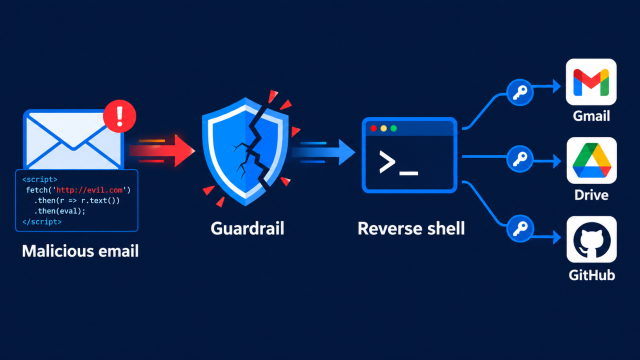
- 4% — tech leaders comfortable relying solely on model guardrails as a safety mechanism
- 40% — cite unauthorized tool/data access as their top AI agent concern
- 50% — of surveyed companies shipped agents that passed internal evals but failed real customers
- 4 — reliability dimensions in Amazon’s framework: consistency, robustness, predictability, safety
The Benchmark Score Was Never the Right Number
Industry standards often rely on EVAL scores, which provide a static snapshot of performance rather than a measure of overall reliability, said Silverthorn, who leads Amazon’s AGI Autonomy research lab. An agent that correctly handles 95% of requests sounds strong until the other 5% involves unauthorized data access or hallucinated instructions — at enterprise scale, that becomes thousands of problematic interactions daily.
“The question is not whether AI agents are capable enough. It’s whether they are reliable enough to trust with real business processes.” — Bryan Silverthorn, Director, AGI Autonomy, Amazon
Why This Argument Sounds Familiar to Robotics Buyers
This is the same gap CreedTec has tracked in physical robotics: NVIDIA’s Isaac GR00T checkpoint scored 97.65% on a standard benchmark and 0% on unfamiliar industrial scenarios in a peer-reviewed test. Software agents are hitting the identical wall — only 4% of surveyed tech leaders feel comfortable relying solely on model guardrails as a safety mechanism. Whether the agent controls a warehouse robot or a chatbot, a benchmark score was never designed to answer “will this behave predictably in my environment.”
The Fear Driving Enterprise Hesitation
Concerns break down predictably: 40% of surveyed leaders flag unauthorized access to tools and data as their primary worry, and 27% point to prompt manipulation. Amazon’s own researchers reportedly nickname their agents “interns” internally — capable of strong work and occasional, spectacular derailment, requiring the oversight a company would give a new hire, not a finished employee.
⚠ Illustrative scenario (fictional): A logistics company deploys an AI agent to auto-approve routine shipment exceptions after it passes internal testing with a 96% accuracy score. In production, an edge case involving a mislabeled customs form causes the agent to approve a shipment that should have been flagged — a failure the benchmark never tested for, because the test set never contained that specific combination of conditions.
Global Implications: Reliability Testing Travels, Benchmarks Don’t
Silverthorn’s four-dimension framework — consistency, robustness, predictability, and safety — offers something more transportable than a benchmark percentage: a checklist any operator can apply to their own deployment conditions, wherever they’re based. For manufacturers and logistics operators in emerging markets evaluating AI agents or autonomous robotics, the takeaway echoes robotics procurement generally: ask vendors how their system performs across those four dimensions in conditions resembling yours, not just what score it posted on someone else’s benchmark.
💡 CreedTec Analyst’s Note — Daniel Ikechukwu
Strategic Impact: The capability-reliability gap identified in software AI agents is the same gap that has limited physical robotics deployment — benchmark scores measure the wrong thing for production trust.
Stop: Treating a vendor’s internal eval score as evidence of production readiness for AI agents or autonomous robots.
Start: Requesting reliability data across consistency, robustness, predictability, and safety before deployment, not just capability benchmarks.
Watch: Whether Amazon’s four-dimension reliability framework gets adopted industry-wide as a replacement for benchmark-only evaluation.
ROI Outlook: Favorable for organizations building reliability testing into procurement now; risky for those scaling deployment on eval scores alone.
A 95% success rate sounds impressive until it’s your production line failing the other 5%. Subscribe to CreedTec’s newsletter for the reliability questions vendors hope you don’t ask.
Further reading on CreedTec:
NVIDIA Isaac GR00T’s Headline Number Isn’t the Number That Matters · The Industrial Robot Cost Guides Everyone’s Reading Assume US Wages · Top Robotics Companies Transforming the Industry in 2026 · AI Agent Governance Risks in 2026 · Industrial AI Safety Concerns in 2026