Fast Fact
The Nvidia Q3 FY27 results, released November 17, show $115.8 billion in revenue, up 103%, and a $130 billion outlook for the next quarter. Data center revenue was $107.6 billion, which is 93% of the total.
For industrial buyers the message is about supply. Demand from AI clouds, industrial and enterprise customers is growing faster than from hyperscalers, so plant-level AI projects compete for the same capacity. The clause below puts capacity and price reviews in writing.
The quarter ended October 25 and is the first report with Colette Kress, the CFO, as interim CEO. The Nvidia Q3 FY27 results figures below come from the company’s own filing unless marked otherwise.
Fast Facts From the Filing
- Revenue of $115.8 billion, up 103% year over year; Data Center $107.6 billion, up 110%; Edge Computing $8.2 billion, up 42%.
- GAAP gross margin 74.8% and GAAP net income $65.3 billion; inventories $39.7 billion.
- Q4 revenue outlook $130 billion, plus or minus 3%, with gross margin of 71% to 72%.
“Our momentum is real.”Colette Kress, interim CEO and CFO, NVIDIA, Q3 FY27 release
| Metric | Details |
|---|---|
| Q3 Revenue | $115.8 billion (+103%) |
| Data Center Revenue | $107.6 billion (+110%) |
| Q4 Revenue Outlook | $130 billion (±3%) |
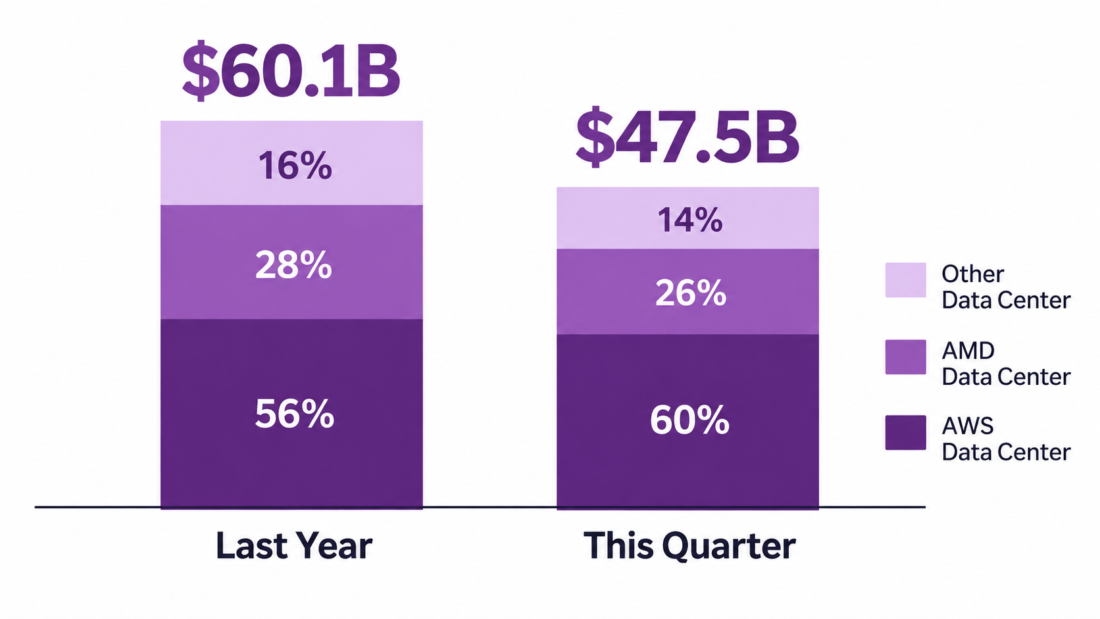
| AI Clouds, Industrial & Enterprise | $47.5 billion (+195%) |
Sources: NVIDIA Form 8-K, November 17, 2026; segment breakdown from results slides, as reported by Investing.com.
How Nvidia Q3 FY27 Results Change Your AI Buying Plan
Reported slide figures split data center into hyperscale at $60.1 billion and AI Clouds, Industrial and Enterprise at $47.5 billion. The two sum to the filing’s $107.6 billion. By our math, the non-hyperscale share rose from about 31% a year ago to about 44%. More of the supply now goes to customers like you, and to rivals bidding for it. We covered how memory costs squeeze that segment; see our analysis where we explain how memory costs squeeze Nvidia’s industrial segment.
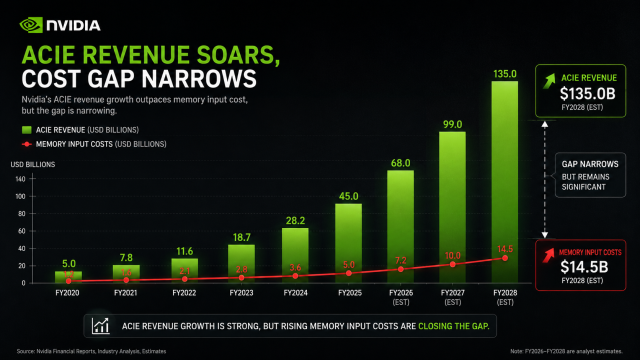
Memory is where budgets break. See our analysis where we explain Micron’s take-or-pay memory contracts, and the one memory price metric that could break your 2026 AI hardware budget. The Nvidia Q3 FY27 results tell you demand is rising, so assume price pressure stays.
Capacity vendors carry their own risk; see our analysis where we explain CoreWeave’s seven-year bet on three-month deals. Shortages spread beyond GPUs; see our analysis where we explain how the AI memory shortage is squeezing everyone else.
Nvidia Q3 FY27 Results Lesson: Compute Capacity and Price-Review Clause (copy-paste)
Add to any GPU cloud, server or AI platform contract. Brackets are suggested values.
1. Capacity commitment. Provider will reserve [N] GPUs of type [X] for Customer from [start date] to [end date] and will not reassign them.
2. Delivery remedy. If capacity is unavailable for more than [5] business days, Customer receives a credit of [X]% of monthly fees per affected day and may terminate without penalty after [30] days.
3. Price review. Rates are fixed for [6] months. Any increase after that requires [60] days’ written notice and is capped at [10]% per year.
4. Substitution. Provider may substitute hardware only with equal or better performance, confirmed in writing.
5. Exit. Customer receives all data and model artifacts in a standard format within [14] days of termination.
Formula: effective cost per useful GPU-hour = monthly fee ÷ (hours reserved × utilization). At 60% utilization the true price is 1.67 times the sticker price.
⚠️ Hypothetical scenario: A Lagos cement producer plans a vision-inspection rollout and gets a GPU cloud quote valid for seven days. After the Nvidia Q3 FY27 results headlines, the vendor reissues the quote at a higher rate with a later start. With no capacity clause or price cap in the contract draft, the plant has no leverage and the project slips a quarter.
💡 CreedTec Analyst’s Note by Daniel Ikechukwu
Strategic Impact
Record revenue says suppliers are selling everything they can make. Industrial teams planning 2027 AI rollouts should assume capacity and price are negotiable only before the order, not after. Write the protections now.
Stop / Start / Watch
- Stop: accepting open-ended quotes with no validity date or capacity guarantee.
- Start: tracking effective cost per useful GPU-hour, not the sticker rate.
- Watch: whether the Q4 outlook of $130 billion that followed the Nvidia Q3 FY27 results holds, and the gross margin guide of 71% to 72%.
ROI Outlook
Illustrative math: a USD 100,000 monthly reservation used at 60% costs USD 166,700 per month of useful capacity. A 10% price rise on that adds USD 10,000 a month before any delay cost.
— Daniel Ikechukwu
Get the next playbook. One copy-paste procurement tool per issue, built for plant and finance leads. Subscribe to the newsletter below.
For vendors: every buyer reading the Nvidia Q3 FY27 results needs visibility into AI infrastructure spend. If you sell AI FinOps, GPU capacity management or cloud cost tooling, email creedtec@creedtec.online to sponsor the next edition.