Fast Facts
The Genesis AI Series A raised $500 million at a $3.5 billion post-money valuation on November 17. The company sells a robot, a foundation model and a simulation platform called Genesis World, yet no customers were named and no revenue was disclosed.
For buyers, the round is a reminder that a simulation claim is a promise until real-world trials back it. The evidence request below puts that proof in writing before a pilot starts.
Genesis AI, based in Paris and San Carlos, California, announced the round on Tuesday. It is a useful test case for any procurement team weighing a robot vendor whose training story starts in simulation.
Fast Facts From the Announcement
- $500 million Series A at a $3.5 billion post-money valuation, co-led by Premji Invest, Khosla Ventures and Eclipse, with Nvidia, AMD Ventures and Bpifrance among participants.
- Products: GENE (a manipulation foundation model), Genesis World (a simulation platform), a data-collection glove, and Eno, a wheeled general-purpose robot.
- No customers are named in the release. Reuters, as carried by KSEV Radio, reports a small test group, an LG CNS partnership and a wider rollout expected in 2027.
“General-purpose robotics is a systems problem, and Genesis is attacking the whole system.”Charly Mwangi, Partner, Eclipse, Genesis AI press release
| Metric | Details |
|---|---|
| Series A Funding | $500 million |
| Post-money Valuation | $3.5 billion |
| Named Customers | 0 |
| Expected Wider Customer Rollout | 2027 |
Announcement: November 17, 2026.
Sources: Genesis AI press release (PR Newswire, November 17); Reuters via KSEV Radio.
How the Genesis AI Series A Changes Your Pilot Process
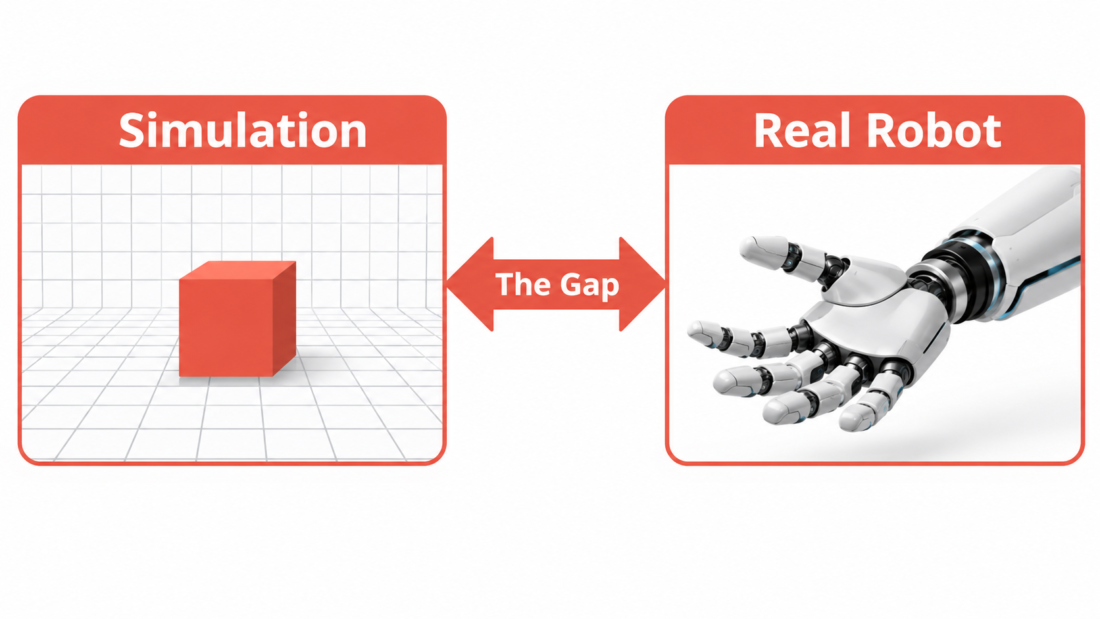
Simulation-first vendors argue that virtual practice replaces costly real trials. That can be true for some skills and false for others, and the gap is rarely published. We have seen how headline numbers hide the gap; see our analysis where we explain what a 99% sim-to-real accuracy claim leaves out. Speed claims need the same scrutiny; see our analysis where we explain why a 100x simulation speed claim has an asterisk.
The money tells you where the market thinks value sits. After the Genesis AI Series A, a platform pitch can look like a product pitch, so separate them in your RFP. Ask what runs in Genesis World, what was trained on real hardware, and which skills were never tested outside simulation. Untested models are a recurring pattern; see our analysis where we explain how one world model runs at 10 fps yet stays untested on hardware.
Synthetic data carries its own limits; see our analysis where we explain the 40% threshold in synthetic robot training data. For the hardware side of this vendor, see our analysis where we explain the Eno wheeled robot. Together they frame what a diligent buyer should request after a Genesis AI Series A headline.
Genesis AI Series A Lesson: Sim-to-Real Evidence Request (copy-paste)
Send before any robot pilot. Thresholds are our suggested starting values; tune per task.
Subject: Evidence request before pilot [site/date]
Hello [name],
Before we sign a pilot, please send:
1. For each task in scope, success rate in simulation and success rate on real hardware, with trial counts (we expect at least [50] real trials per task).
2. The gap between the two. We treat a gap above [10] percentage points as a fail until explained.
3. How many test conditions (objects, lighting, layouts) were held out from training.
4. Human takeover count and recovery time during real trials.
5. Failure logs and video from the real trials, delivered within [48] hours of our pilot.
6. Who owns the data our site generates, and whether it trains your models.
Regards, [your name]
Formula: sim-to-real gap = simulation success rate − real-world success rate. Report it per task, never as one average.
⚠️ Hypothetical scenario: A Lagos electronics assembler is pitched a dexterous robot by a well-funded vendor after a record round like the Genesis AI Series A. The demo reel is impressive and the simulation metrics are strong. Nobody asks for real-trial counts. On the factory floor, small connector variations break the robot’s grasps, and the pilot’s labor savings disappear into supervision time.
💡 CreedTec Analyst’s Note by Daniel Ikechukwu
Strategic Impact
A $3.5 billion valuation with no disclosed revenue prices future capability, not current performance. That does not make the technology weak. It means buyers carry the burden of proof, and a written evidence request moves that burden back to the vendor.
Stop / Start / Watch
- Stop: treating funding size as a proxy for deployment readiness.
- Start: requiring per-task sim and real success rates in every pilot contract.
- Watch: named customers, trial data and Eno production numbers as the Genesis AI Series A money turns into deployments.
ROI Outlook
Illustrative math: a robot that scores 95% in simulation but 70% on real tasks has a 25-point gap. On 1,000 daily picks, that is 250 extra failures needing human help.
— Daniel Ikechukwu
Get the next playbook. One copy-paste robotics buying tool per issue, built for operators and procurement leads. Subscribe to the newsletter below.
For vendors: every buyer reading about the Genesis AI Series A will want independent validation of simulation claims. If you sell robot simulation, sim-to-real validation or synthetic data tooling, email creedtec@creedtec.online to sponsor the next edition.