Fast Facts
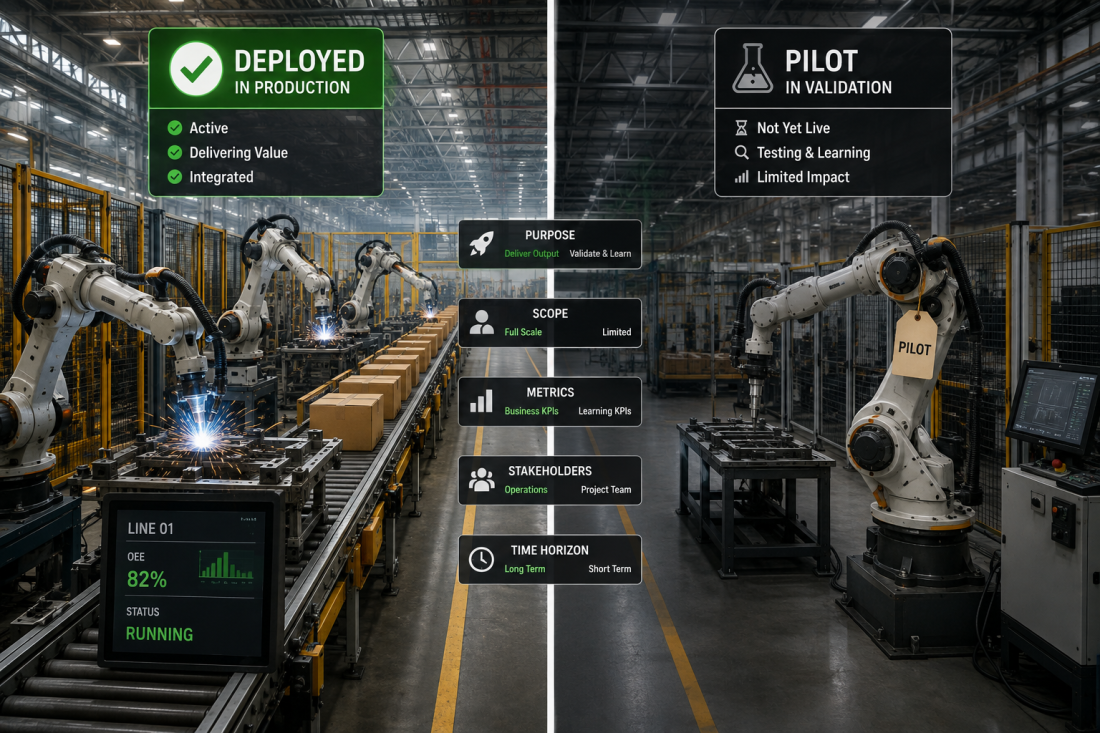
Global industrial robot installations reached a record 542,000 units in 2024, more than double the figure from a decade earlier, with the International Federation of Robotics valuing those installations at a record $16.7 billion. The headline number hides a sharper split: buyers and investors are separating vendors that are still validating their technology from vendors proving they can deploy it, get paid for it, and repeat the process at scale.
Industrial robot installations just posted their strongest year on record, and the number alone tells only half the story. Global installations reached 542,000 units in 2024, more than double the total from ten years earlier, while the International Federation of Robotics reports the market value of those installations hit a record $16.7 billion, according to GlobeNewswire’s August 2026 coverage. Billions of dollars have poured into AI robotics companies over the past two years, and this is the first year that capital is showing up as hard installation numbers instead of pitch-deck projections.
What a Record Year Actually Signals
The scale of the jump matters more than the headline figure alone. Industrial robot installations doubling over a decade tracks a labor shortage that has moved from a manufacturing talking point to a boardroom line item, especially in repetitive, physically demanding roles that companies increasingly can’t staff at any wage. That shortage is the demand-side pressure behind the $16.7 billion figure, and it explains why robotics vendors are no longer competing only on capability, they’re competing on proof that a deployment holds up in production, not just in a demo.
Robotics startup funding tells the same story from the capital side: globally, robotics startups have raised $18.8 billion so far in 2026, already ahead of the $15 billion raised across all of 2025 and comfortably past the $14.1 billion peak from 2021, according to Crunchbase News. That capital wants installations to convert into contracts, not just pilots.
542,000 — industrial robot units installed globally in 2024, more than double the total from a decade earlier.
$16.7 billion — record market value of those installations, per the International Federation of Robotics.
The Line Investors Are Now Drawing
As capital behind the sector matures, the market is starting to draw a sharper line between companies still validating their technology and those proving they can deploy it, get paid for it, and repeat the process at scale, according to the same GlobeNewswire report. That distinction is the real story behind the record industrial robot installations figure: the number describes total volume, not which vendors are actually generating durable, repeatable revenue from it. See our analysis where we explain why humanoid robot production numbers rarely survive independent verification.
Get paid for it and repeat the process at scale.— GlobeNewswire, “Industrial Robot Installations Hit Record Highs,” August 2026
⚠ Fiction — illustrative scenario: A plant manager reviews two robotics vendor proposals side by side. Both cite the same record installation figures in their pitch decks. Only one can produce a customer reference willing to confirm uptime numbers over a full year of production. The other vendor’s references are all pilots still in their first ninety days. The decks looked identical. The reference calls didn’t.
Why Labor Fear Is Driving the Spending, Not Just Capability
Human behavior explains why installations are accelerating faster than the underlying technology has fundamentally changed. Fear of not being able to staff a line at all, not excitement about robotics capability, is what’s pushing procurement budgets to approve deployments faster than usual due-diligence cycles would normally allow. That same fear is what makes buyers vulnerable to vendors whose demos outpace their actual production reliability. Industrial robot installations recorded this year reflect real demand, but demand under pressure is exactly when buyers skip the reference checks that would separate a validated platform from an unproven one. See our related coverage of why most industrial robot cost guides assume US wages and the real cost differences between industrial and collaborative robots.
Global Implications
For manufacturers outside the US, Germany, and China, where most of this installation growth is concentrated, the record year changes vendor leverage. Established robotics companies now have more validated deployments to point to, but they also have less incentive to negotiate on price or customize for smaller regional buyers. Industrial robot installations are scaling fastest exactly where labor shortages are most acute, and that isn’t evenly distributed across emerging markets. See our analysis of why Japanese robots function as economic lifelines rather than job killers and South Korea’s robot density and the supply chain risk behind it.
💡 CreedTec Analyst’s Note — Daniel Ikechukwu
Strategic Impact: Record industrial robot installations numbers describe volume, not vendor reliability. Buyers who treat the headline figure as due diligence are skipping the step that actually matters.
- Stop: Accepting a vendor’s installation count as proof of long-term production reliability.
- Start: Requesting customer references with at least twelve months of live production data, not pilot-stage testimonials.
- Watch: Whether 2025 installation data shows the same growth rate, or whether 2024’s record reflects a one-time catch-up after years of labor shortage pressure.
ROI Outlook: Vendors with verifiable, long-running deployments justify a premium. Vendors leaning on installation totals without production-stage references are the ones most likely to slip on delivery timelines.
Should procurement teams ask vendors for deployment data beyond total installation counts?
Yes. Total industrial robot installations figures describe industry-wide volume, not a specific vendor’s reliability. Ask for production-stage references, not pilot testimonials, before treating a large installation count as due diligence.
Industrial robot installations just had their best year on record, and that record is genuine. What it doesn’t tell a buyer is which vendor behind those numbers can actually keep a robot running on a factory floor for a full year without a service call every other week. That’s the number worth asking for next.
Get CreedTec’s next robotics procurement briefing before your next vendor evaluation.
Subscribe free
Sources
- GlobeNewswire, “Industrial Robot Installations Hit Record Highs as Global Labor Shortages Deepen,” August 2026
- GlobeNewswire, “Industrial Robot Installations Hit Record Highs Amid Labor Shortage Crisis,” August 2026
- Crunchbase News, “Robotics Startups On Fire As Venture Funding Surges To Record Numbers In 2026,” June 2026