Fast Facts
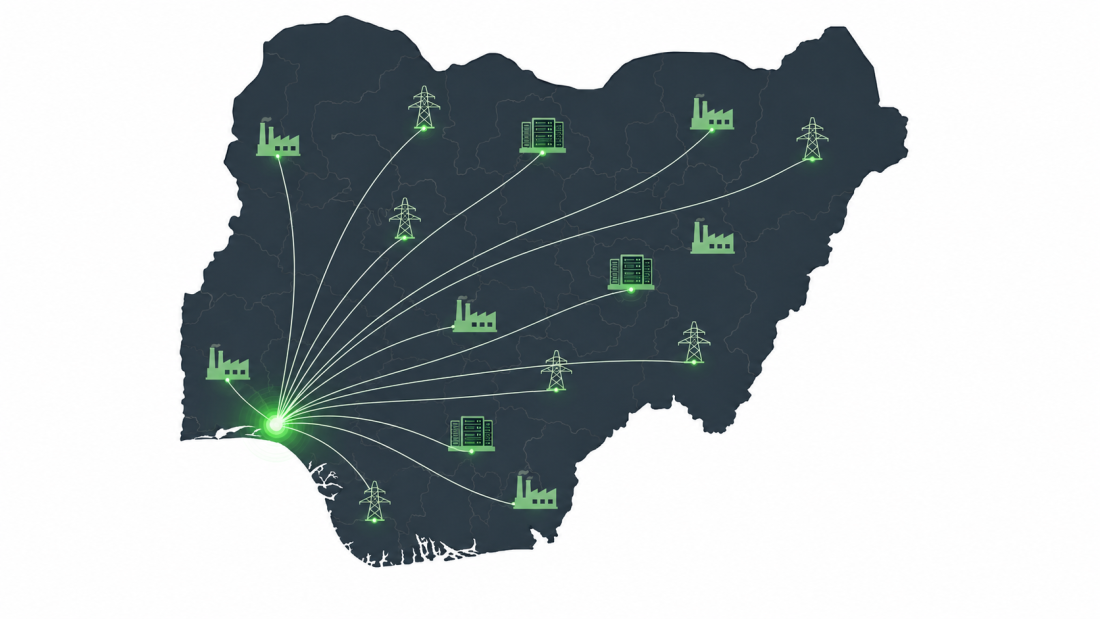
Schneider Electric’s automation unit Lauritz Knudsen just convened distributors, contractors, and system integrators in Lagos to court Nigeria’s industrial tech market. It looks like a sales event. It’s actually a spec-setting play: whoever trains the largest network of local electrical contractors and integrators controls which automation and edge-computing standards get written into the next decade of Nigerian industrial builds — long before most of that market even exists yet.
Schneider Electric’s electrical and automation business, Lauritz Knudsen, brought together distributors, electrical contractors, consultants, and system integrators at the Sheraton Lagos Hotel this week to showcase automation technologies for Nigeria’s evolving infrastructure needs, according to Punch Newspapers. On paper, it’s a product demonstration. In practice, it’s the opening move in a much longer game: capturing Nigeria’s industrial tech market before local competitors can define what “standard” even means here.
Why Training Contractors Matters More Than Selling Hardware
“Meeting these ambitions requires more than innovative products. It requires strong partnerships, technical expertise and continuous knowledge sharing,” said Dallal Slimani, Head of Strategy, Business Development, Pricing and LK Middle East and Africa at Lauritz Knudsen. That’s a telling admission from a hardware company: the product isn’t the moat. The relationship with the electrician who specifies it is.
Once a system integrator is trained on one vendor’s protocols, switching costs pile up fast — retraining staff, re-certifying installations, rewriting maintenance contracts. Schneider isn’t just selling panels and automation controllers; it’s building the habit loop that makes its equipment the default choice for the next factory, hospital, or data center built in Lagos or Kano. See our earlier analysis of Siemens Xcelerator’s hidden integration cost, where the same channel-lock-in logic plays out in a different market entirely.
$168.96M → $356.42M
Nigeria’s industrial automation market is projected to grow from roughly $169 million in 2025 to $356 million by 2035, a 7.75% compound annual growth rate.
Source: Expert Market Research, “Nigeria Industrial Automation Market Size & Outlook,” 2026
That’s a small market today — which is exactly the point. A vendor that locks in the training relationships now, while the market is still forming, doesn’t need to fight for share later. It already owns the specification habits of the people writing the purchase orders.
The Edge-Computing Angle Nobody’s Pricing In
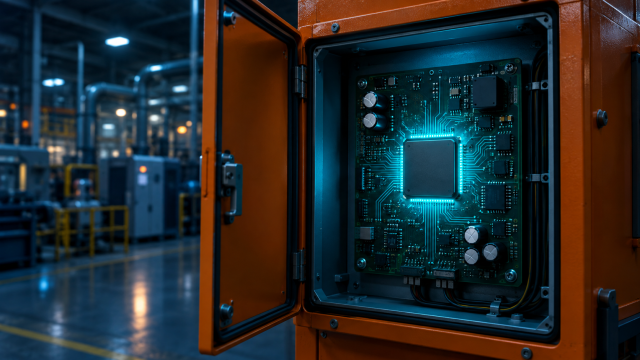
Schneider’s Nigeria push isn’t only about switchgear and distribution panels. In earlier 2026 remarks, Ajibola Akindele, Country President of Schneider Electric Nigeria, tied the strategy directly to edge computing and human-machine interfaces, arguing that business continuity in Nigeria depends on solutions that don’t rely solely on external infrastructure. That’s a direct response to a fear every Nigerian plant manager already carries: unreliable grid power and inconsistent connectivity making cloud-dependent systems unusable exactly when they’re needed most.
“Edge computing provides that autonomy, while HMIs give operators the power to respond to system conditions on the ground, with clarity and speed.”— Ajibola Akindele, Country President, Schneider Electric Nigeria
The global industrial edge-computing market is projected to grow from $21.2 billion in 2025 to $44.7 billion by 2030 — a 16.1% compound annual growth rate. For a country where grid instability is the norm rather than the exception, edge computing isn’t a premium upsell — in Nigeria’s industrial tech market, it’s the only version of “smart factory” that actually survives contact with local infrastructure. See our coverage of industrial AI pilot projects in Nigeria for how that infrastructure gap has already shaped which technologies actually get adopted.
⚠ Fiction — composite scenario, not a real event: A Lagos-based system integrator trains its entire technical team on one automation vendor’s protocol over eighteen months. A cheaper competitor enters the market two years later with better specs on paper. The integrator sticks with the original vendor anyway — the retraining cost and re-certification paperwork alone would wipe out any savings from switching.
Global Implications
Nigeria isn’t the only frontier in this playbook, and the same channel-first logic applies across Africa’s broader industrial tech market. Schneider has separately pushed into Africa’s industrial cybersecurity gap, where the continent’s market is projected to more than double from roughly $680 million today to $1.44 billion by 2031, according to BusinessDay. Elijah Daniel, Schneider’s country sales director for process automation and software in Anglophone Africa, pointed to a cultural risk as much as a technical one: many plant operators still run on a “run to failure” philosophy that made sense for mechanical systems but is a liability for networked ones.
For competitors — Siemens, ABB, Honeywell, Rockwell — the lesson is the same one CreedTec has tracked across other emerging markets: whoever trains the local workforce first usually keeps the account, regardless of who has the better spec sheet three years later.
💡 CreedTec Analyst’s Note — Daniel Ikechukwu
Strategic Impact: Schneider’s Lagos event is a channel-capture play disguised as a product showcase. The real asset being built isn’t a sales pipeline — it’s a trained workforce that defaults to Schneider’s protocols for the next decade of Nigerian industrial builds.
Stop: Evaluating vendor events in Nigeria’s industrial tech market purely as product marketing.
Start: Tracking which vendors are training local contractors and integrators, not just which vendors are announcing the biggest contracts.
Watch: Whether Siemens, ABB, or a local Nigerian systems-integration player runs a comparable training push before Schneider’s contractor network solidifies.
ROI Outlook: Vendors that invest in contractor training now accept lower near-term revenue for a durable specification advantage across Nigeria’s industrial tech market. For buyers, that means today’s “free” training session is tomorrow’s vendor lock-in — worth negotiating around before signing anything long-term.
Nigeria’s industrial tech market is still small enough that the winner won’t be decided by who sells the most equipment this year. It’ll be decided by whoever trains the most contractors before the market realizes how big it’s about to get.
Subscribe to CreedTec’s newsletter — it tracks which industrial vendors are quietly building channel control in emerging markets before the competition notices.
Sources
- Punch Newspapers — original event reporting
- Techpoint Africa — edge computing and HMI commentary
- Expert Market Research — Nigeria industrial automation market sizing
- BusinessDay — Africa industrial cybersecurity market
- Schneider Electric Nigeria — company profile
Further reading: Siemens Xcelerator’s Hidden Integration Cost · Industrial AI Pilot Projects in Nigeria · Nigeria AI-IoT Policy Investment Alignment 2026 · Industrial IoT ROI 2026 · The Audit-Driven IIoT Adoption Crisis