Fast Facts
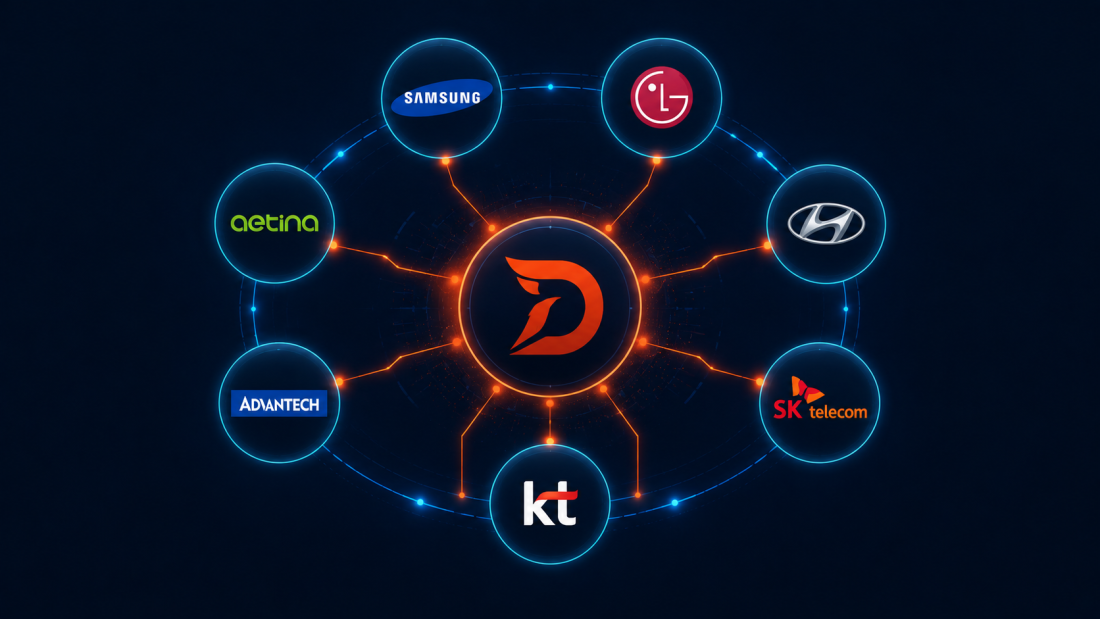
Qualcomm Dragonwing IoT Day gathered over 500 attendees from Samsung, LG, Hyundai, SK Telecom, and KT in Seoul on August 31—a who’s-who of Korean industrial and telecom powerhouses. The event showcased 16 Qualcomm demos and 10 partner demos across robotics, vision AI, agentic AI, and industrial automation. The story isn’t the demos. It’s that Qualcomm has assembled the ecosystem before most competitors have finished their strategy presentations.
Qualcomm Dragonwing IoT Day didn’t make headlines for a product launch. It made headlines for who showed up. On August 31, 2026, Qualcomm hosted its first dedicated Dragonwing IoT Day at The Grand Lotte Seoul, drawing more than 500 attendees from Samsung Electronics, LG Electronics, Hyundai Motor Company, SK Telecom, KT, and LG Uplus. The event featured technical sessions on industrial automation, robotics, agentic AI, and industrial cameras, plus partner presentations from Advantech, Innodisk, Aetina, and others.
The timing matters: Qualcomm is positioning its Dragonwing B2B platform—encompassing industrial IoT, embedded IoT, networking, and cellular infrastructure—as the default hardware-software layer for the next generation of industrial AI. Sixteen Qualcomm demos and ten partner demos showcased Dragonwing-based robotics and vision AI solutions, including the IQ10 Robotics Reference Design, Arduino Ventuno Q with IQ8, and real-time object recognition via Edge Impulse.
Why Partner Ecosystems Matter More Than Individual Products
The industrial IoT market is shifting from single-device deployments to complex multi-device systems. Northern.tech’s 2026 State of Industrial IoT Device Lifecycle Management report found that only 10% of OEMs still describe their products as single-device systems—the other 90% build products composed of two to five or more devices, each with its own hardware and OS. 85% of OEMs expect the number of devices within their products to grow.
Managing that complexity requires a platform that spans hardware, software, and connectivity. Qualcomm’s Dragonwing is explicitly designed for that—combining high-performance, low-power computing, on-device AI, and connectivity technologies to support speed, scalability, and stability in industrial settings.
Kwon Oh-hyung, Qualcomm’s APAC President, framed the strategy directly at Qualcomm Dragonwing IoT Day: “To realize the potential of Agentic AI, intelligence must seamlessly connect and operate across devices, edge, and cloud. Through platform-based AI workload optimization that spans devices, the edge, and the cloud, Qualcomm is helping corporations achieve the optimal balance among performance, expense, and power efficiency”.
The Korean Industrial Base as a Proving Ground
Korea is a deliberate choice for Qualcomm Dragonwing IoT Day. The country is home to Samsung, LG, and Hyundai—three of the world’s largest industrial and consumer electronics manufacturers—and the event’s attendee list reflects that concentration. Hyundai’s Robotics Lab presented, as did industrial partners like SST, Advantech, and Innodisk.
The demos on display at Qualcomm Dragonwing IoT Day were not theoretical. Point Mobile showcased an industrial RFID handheld device; Advantech presented industrial vision inspection, VLM, and drone control modules; SST exhibited Dragonwing-based booster robots and quadruped robots; Innodisk demonstrated real-time VLM and 8-channel GMSL2 support; Detech unveiled industrial safety AI technologies like blind spot detection and pothole detection. Aetina presented agentic AI solutions; XSLAB offered a live Phi-4 demo; IntegriTech demonstrated LLM, vision AI, and on-device vision-language-action (VLA).
What This Means for Industrial Buyers
Qualcomm Dragonwing IoT Day signals that the industrial IoT market is consolidating around platform players. Qualcomm’s Dragonwing IoT Day is proof that the company intends to be one of them—not just a chip supplier, but the ecosystem owner. For procurement teams evaluating IIoT vendors, this matters because platform consolidation changes vendor risk and integration complexity:
| Impact | What It Means |
|---|---|
| Fewer integration points | A unified platform reduces the number of vendors to manage |
| Faster time-to-market | Pre-integrated hardware, software, and connectivity accelerates deployment |
| Higher switching costs | Once you’re on a platform, moving becomes expensive |
| Ecosystem lock-in | The value is in the partner network, not just the core product |
The average IoT product now takes nearly 54 months to evolve from planning to general availability—2.7 months longer than the year before. Platforms that reduce that timeline by providing pre-integrated components will win industrial budgets.
⚠ Fiction—composite scenario, not a real event: A mid-sized manufacturer spends 18 months integrating five different IIoT vendors—sensors from one, gateways from another, analytics from a third, and connectivity from a fourth. By the time the system is live, two of the vendors have been acquired, one has changed its API, and the integration team has turned over twice. A competitor using a single-platform approach from a vendor like Qualcomm is already on its second deployment cycle.
Global Implications
For manufacturers outside Korea, Qualcomm Dragonwing IoT Day signals a broader trend: industrial IoT is becoming a platform game, not a component game. The companies that can offer integrated hardware, software, and connectivity across the stack will capture the procurement budgets that currently go to fragmented best-of-breed solutions.
The question for buyers: Is your procurement strategy still built around point solutions, or are you evaluating platform vendors that can reduce integration risk and accelerate time-to-value?
💡 CreedTec Analyst’s Note — Daniel Ikechukwu
Strategic Impact: Qualcomm’s Dragonwing IoT Day is a market-positioning event disguised as a technical showcase. The company is building a moat around its industrial IoT platform by assembling the Korean industrial ecosystem before competitors can.
Stop: Treating IIoT procurement as a collection of independent point solutions. The economics of integration favor platform adoption.
Start: Evaluating industrial IoT vendors on their ecosystem breadth—partner count, reference designs, and vertical-specific solutions—not just their product specs.
Watch: Whether Qualcomm expands Dragonwing IoT Day to other regions, which would signal a global platform strategy rather than a regional play.
ROI Outlook: Platform-first procurement reduces integration cost and time-to-market but increases switching cost. The tradeoff is favorable for organizations that plan to scale.
Frequently Asked Questions
Is Qualcomm Dragonwing a competitor to AWS IoT or Azure IoT?
Yes and no. Dragonwing is a hardware-software platform for industrial and embedded IoT, while AWS and Azure are cloud platforms. The competition is at the edge and device layer, where Qualcomm has a natural advantage in silicon and connectivity.
What does Qualcomm’s partnership with Korean companies mean for non-Korean buyers?
It means the reference designs and solutions validated in Korea will likely expand to other regions. Korean industrial companies are early adopters, and their deployments often become templates for global rollouts.
Should procurement teams prioritize platform vendors over point solutions?
For greenfield deployments, yes. For brownfield environments with existing infrastructure, a hybrid approach may be more practical. The decision depends on your integration budget and timeline.
How does Dragonwing compare to NVIDIA’s industrial AI platform?
NVIDIA focuses on AI compute and simulation; Qualcomm focuses on low-power edge compute and connectivity. The two are complementary rather than direct competitors, though they overlap in robotics and vision AI.
What is the procurement risk of platform lock-in with Dragonwing?
Switching costs are higher with a platform approach, but the integration savings typically outweigh the lock-in risk for most industrial operators. The key is to negotiate data portability and API access in the contract.
Subscribe to CreedTec’s weekly briefing—industrial AI revenue, robotics economics, and the procurement signals behind the hardware headlines.