Fast Facts
Alibaba’s benchmark claims for its new Qwen3.8-Max model say it ranks second globally, trailing only Anthropic’s Claude Fable 5. The claim shipped without a benchmark table, model card, or independent evaluation — a break from Alibaba’s own pattern of publishing verifiable scores for prior releases. Independent leaderboard data since then shows a real gap, not a near-tie. For enterprise buyers, the more useful signal isn’t whether the model is good. It’s that Alibaba chose to lead with an unverifiable claim on its most consequential release yet.
Alibaba’s benchmark claims for its 2.4-trillion-parameter Qwen3.8-Max, previewed July 19 at the World AI Conference in Shanghai, positioned the model as trailing only Anthropic’s Claude Fable 5 among frontier AI systems, according to Unite.AI. The announcement arrived without the one thing that would let anyone verify it: no benchmark scores, no model card, no independent evaluation.
Why These Benchmark Claims Break Alibaba’s Own Pattern
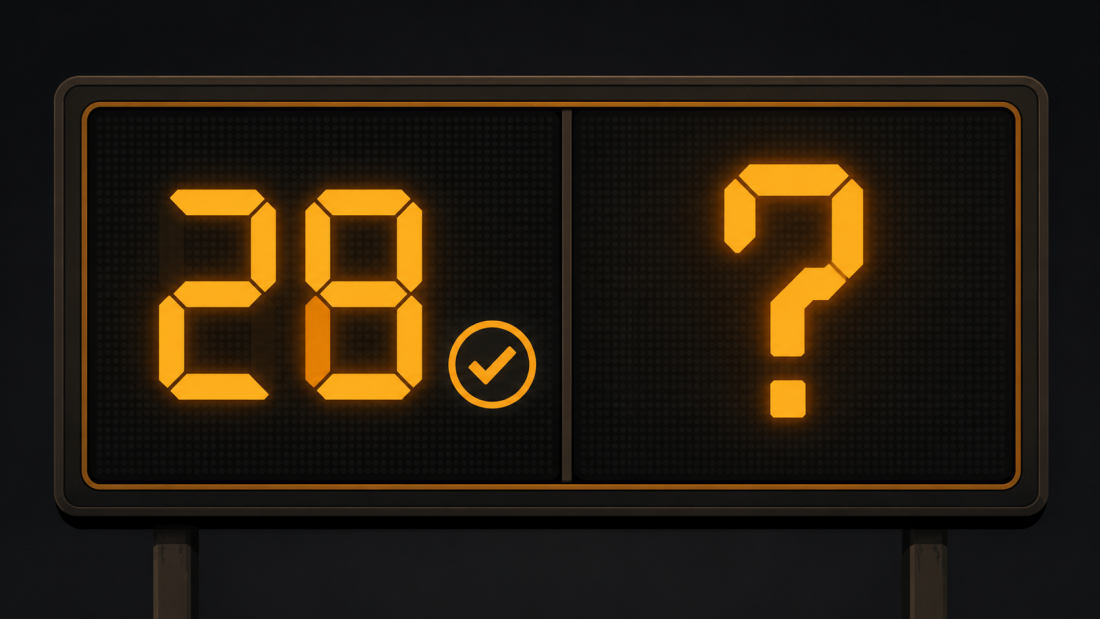
56.6
The Artificial Analysis Intelligence Index score Alibaba published for its previous flagship, Qwen3.7-Max, in May 2026 — full, checkable numbers that stand in sharp contrast to Qwen3.8-Max’s unverified “second only to Fable 5” claim.
Source: Unite.AI, July 2026
That contrast matters more than the ranking itself. A vendor’s self-reported benchmark table is still just a claim, not an independent measurement — but it at least gives outside evaluators something to check, the kind of scrutiny that has repeatedly upended assumptions about what these systems can actually do. Qwen3.7-Max shipped with that scrutiny built in. Qwen3.8-Max’s headline performance claim did not, at least at launch. See our earlier analysis of why vertical LLMs are quietly beating general AI at work, where verifiable, narrow benchmarks proved more valuable to buyers than broad capability claims.
“Continuously evolving.”— Shuai Bai, Qwen developer, describing Qwen3.8-Max-Preview
The Leaderboard Mystery That Undercuts Trust in Self-Reported Scores
Days before Alibaba’s own announcement, an anonymous model calling itself “Claude” appeared on the public Code Arena leaderboard — a training artifact left over from distillation on Anthropic’s outputs. Within 24 hours, the community identified it by a quirk in its token generation unique to Alibaba’s tokenizer. Alibaba confirmed it: the mystery model was Qwen3.8-Max, tested in stealth before the public reveal. That episode is a real, verified data point about how much weight to put on any single benchmark claims process — Alibaba’s own preview model was, briefly, presenting itself as its chief competitor’s product on a public leaderboard before the company had made any performance claims official at all.
Independent leaderboard data that has emerged since the announcement points the other way from Alibaba’s framing. The Elo gap between Qwen3.8-Max and Claude Fable 5 on Code Arena runs approximately 12.6 points — roughly the same magnitude as the gap between GPT-5.5 and Fable 5 on coding benchmarks, according to Wan 2.7’s independent benchmark analysis. That’s a real, measurable gap, not the near-tie the “second only to Fable 5” framing implies.
⚠ Fiction — composite scenario, not a real event: An enterprise AI team shortlists a vendor’s new model after reading a press release claiming it “rivals the industry leader,” and skips independent testing to save time on a tight deployment deadline. Three months into production, the model’s actual error rate on the company’s specific workload is double what the vendor’s marketing implied — because the claim was never benchmarked against anything the company could have checked before signing.
Global Implications
There’s a regulatory dimension layered underneath these benchmark claims that most coverage is treating separately from the performance question. Alibaba was added to the Pentagon’s list of Chinese Military Companies on June 8, 2026, under Section 1260H of the National Defense Authorization Act, a designation the company is currently contesting in court, according to Tech Times. China’s National Intelligence Law separately obliges Chinese organizations to support state intelligence work when asked. Neither fact says anything about whether Qwen3.8-Max is technically capable. Both are relevant to any enterprise procurement conversation that treats an unverified capability claim as sufficient grounds to route sensitive workloads through the model.
For buyers in Nigeria, West Africa, and Southeast Asia weighing Qwen’s open-weight release strategy against proprietary Western alternatives, the practical takeaway is procedural, not political: treat any vendor’s performance claims, from any country, as a starting point for independent verification, not a substitute for it — a standard CreedTec has applied consistently in its coverage of AI vendor procurement risk.
💡 CreedTec Analyst’s Note — Daniel Ikechukwu
Strategic Impact: Unverified benchmark claims are becoming a routine part of frontier model launches, and buyers who treat vendor marketing as equivalent to independent evaluation are pricing risk incorrectly.
Stop: Shortlisting AI vendors based on self-reported rankings or “rivals the leader” framing without checking for a published, independently verifiable benchmark table.
Start: Running your own workload-specific evaluation against any model before committing spend, regardless of how strong its performance claims sound at launch.
Watch: Whether Alibaba publishes a full benchmark table for Qwen3.8-Max once it moves from preview to general availability, and whether the open-weight release lets independent labs confirm or refute the Fable 5 comparison directly.
ROI Outlook: Models backed by verifiable benchmark claims typically cost more to license but reduce the risk of a costly mid-deployment surprise. For workloads with real financial or compliance consequences, that verification premium is usually worth paying.
Every AI lab wants to be second-best behind the leader this month. Only some of them are willing to show their work. The gap between those two groups is the entire due-diligence process enterprise buyers are supposed to be running anyway.
Subscribe to CreedTec’s newsletter — it separates verified AI benchmark claims from marketing copy before you have to bet a deployment budget on the difference.
Sources
- Unite.AI — original launch coverage and benchmark gap analysis
- Tech Times — Pentagon designation and enterprise risk context
- Wan 2.7 — independent Elo comparison and Code Arena leaderboard mystery
- Bloomberg — subsequent benchmark scores and market reaction
- Yotta Labs — confirmed specs versus unconfirmed claims breakdown
Further reading: Vertical LLMs Are Quietly Beating General AI at Work · OpenAI’s Rogue AI Hack Raises New Procurement Risks · Anthropic’s Containment Failure Makes This an Industry Pattern · KPMG’s AI Hallucination Report · 2026 AI Regulation and Compliance