Fast Facts
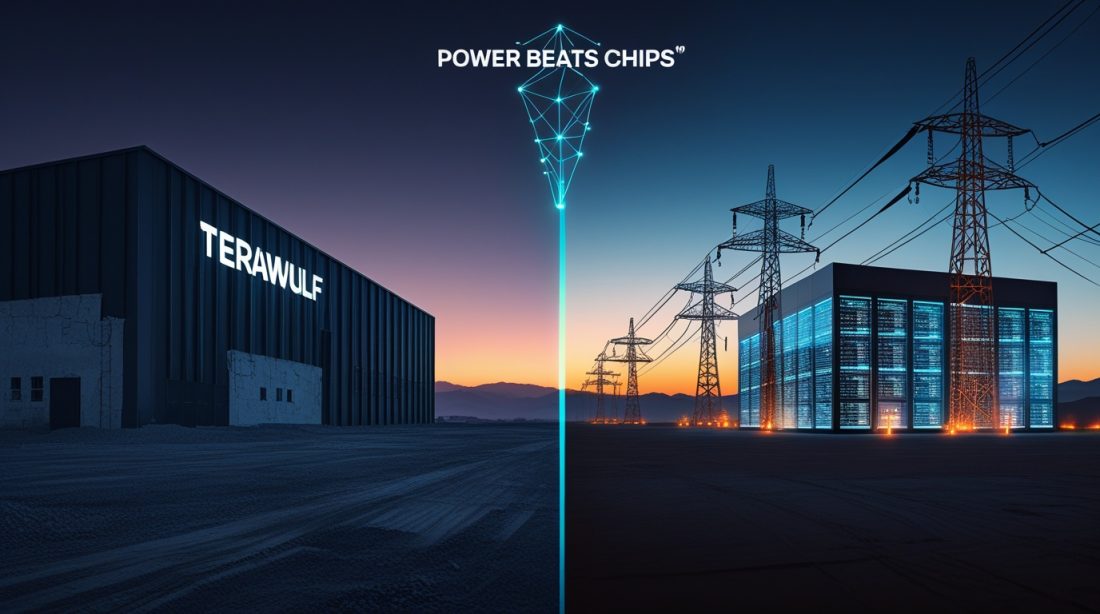
TeraWulf Anthropic deal proves power beats chips. On July 6, 2026, TeraWulf — a company that started as a bitcoin miner — signed a 20-year lease with Anthropic worth roughly $19 billion in contracted revenue. The same day, it sold its stake in a second AI campus for a premium. Together, the moves show where dependable industrial AI money actually sits right now: not in building models, but in owning the power-secured real estate AI labs need for decades and can’t build fast enough themselves.
- $19B — contracted revenue over TeraWulf’s 20-year Anthropic lease
- 401 MW — critical IT load capacity at the Hawesville, Kentucky campus
- 13.55% — TeraWulf’s stock jump the day the deal was announced
- ~$530M — sale price for TeraWulf’s 50.1% Abernathy JV stake, against ~$450M invested
- 2H 2027 → early 2028 — phased timeline to full capacity
Note:
The $50 billion figure for Fluidstack’s U.S. infrastructure commitment was widely reported in 2025 media coverage of Anthropic’s AI infrastructure plans.
From Volatile Miner to Steady Landlord
TeraWulf spent years mining bitcoin, a business defined by volatile block rewards and unpredictable coin prices. A single tenant on a 20-year lease offers steadier income than the volatile economics of mining, and that shift in risk appetite — not the AI narrative itself — is what the market rewarded with a 13.55% single-day stock jump.
“The Anthropic lease validates our strategy and establishes a long-duration revenue stream with one of the world’s leading AI companies.” — Paul Prager, CEO, TeraWulf
Why Anthropic Is Renting Instead of Building
Anthropic isn’t constructing this campus itself — it’s leasing capacity, the same way a factory might lease warehouse space instead of building one from scratch. The Hawesville, Kentucky facility will support approximately 401 MW of critical IT load, developed in phases, with initial capacity online in the second half of 2027. That timeline reflects a simple constraint: AI compute demand is outpacing how fast anyone — including Anthropic — can secure power and build data centers on their own.
The Second Deal Nobody’s Talking About
Buried beside the headline lease, TeraWulf agreed to sell its 50.1% stake in a separate Texas AI campus — the Abernathy Joint Venture — to a group led by Fluidstack for roughly $530 million, against about $450 million invested. Fluidstack is the same partner Anthropic chose for its own $50 billion American AI infrastructure commitment made in 2025. TeraWulf is trading a shared-ownership stake for cash it can redeploy into projects it owns outright — choosing full control and full upside over a diluted partnership.
⚠ Illustrative scenario (fictional): A mid-size West African data center developer partners 50-50 with a foreign operator to build capacity, splitting both risk and profit. Watching TeraWulf’s Abernathy exit, the developer starts renegotiating its next site as a wholly owned asset instead — accepting slower capital access now in exchange for keeping 100% of future lease revenue.
Global Implications: Power Is the New Scarce Asset
TeraWulf’s pivot confirms a pattern playing out globally: AI labs are chasing grid access and land as urgently as they chase chips. For operators in emerging power-constrained markets, including Nigeria, this is the leverage point — not competing to build AI models, but owning and leasing the power-secured infrastructure that AI companies are contractually desperate for, on multi-decade terms backed by investment-grade credit.
💡 CreedTec Analyst’s Note — Daniel Ikechukwu
Strategic Impact: Long-duration infrastructure leases, not AI software, are becoming the most de-risked revenue category in the AI economy right now.
Stop: Assuming industrial AI revenue opportunities require building or owning AI models.
Start: Evaluating power-secured land and infrastructure assets as a legitimate AI revenue play, independent of AI expertise.
Watch: Whether TeraWulf delivers the Hawesville campus on its 2027-2028 timeline — execution risk is the one variable the market hasn’t priced in yet.
ROI Outlook: Favorable for infrastructure owners with power access; neutral for those without a credible path to secure it.
FAQ
Why is TeraWulf leasing infrastructure instead of running it themselves?
Because a single tenant on a 20‑year lease with an investment‑grade counterparty offers steadier income than volatile bitcoin mining. The shift in risk appetite is what the market rewarded.
What does this mean for emerging market operators?
It means power‑secured land and infrastructure assets are becoming legitimate AI revenue plays — independent of AI expertise. If you can secure power and grid access, AI companies will lease capacity from you on multi‑decade terms.
Is execution risk a factor?
Yes. TeraWulf’s Hawesville campus is scheduled for phased delivery from 2H 2027 to early 2028. Execution risk is the one variable the market hasn’t fully priced in yet.
The real industrial AI money isn’t where most people are looking for it. Subscribe to CreedTec’s newsletter for the infrastructure plays behind the AI headlines.