How a single open-source release could fracture the proprietary barriers around robotics and autonomous vehicle development.
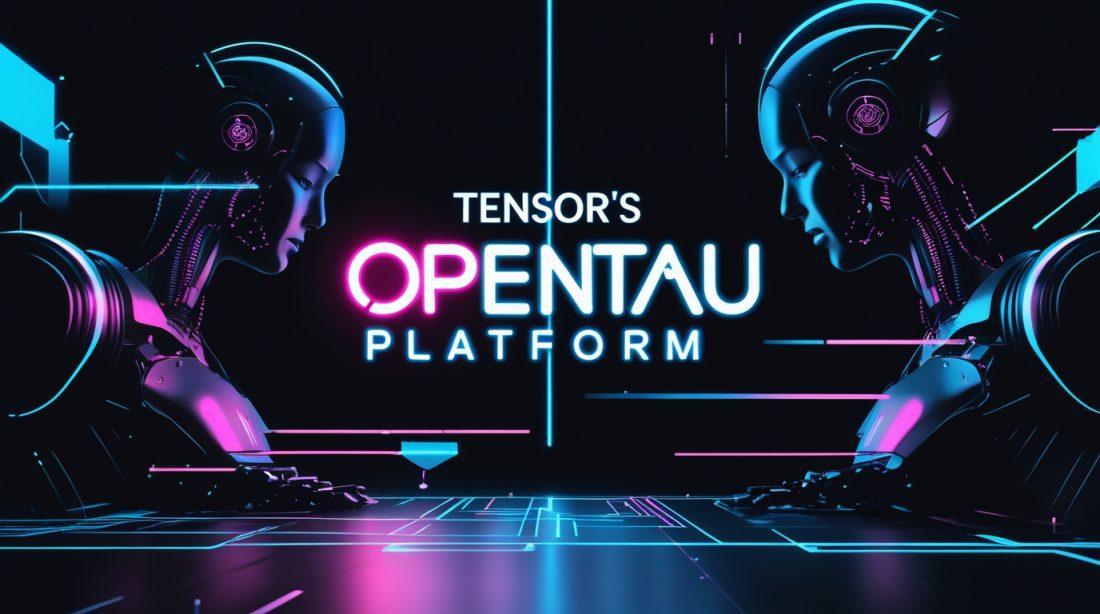
The technology landscape witnessed a significant strategic move at CES 2026. Tensor Auto Inc., a company better known for its ambitious personal Robocar project, open-sourced what it calls the OpenTau Platform. This toolchain is designed specifically for building Vision-Language-Action (VLA) models—the sophisticated AI brains that enable machines to see, reason, and act in the physical world. While presented as a gift to the global research community, this calculated decision to release the OpenTau Platform reveals a deeper strategy to accelerate the entire field of embodied intelligence, from which Tensor and its commercial Robocar stand to gain immensely.
Why the OpenTau Platform Changes the Game for Physical AI Development
The core challenge in creating useful robots or fully autonomous systems is developing AI that seamlessly integrates perception, reasoning, and physical action. VLA models represent the leading architectural paradigm to solve this. However, training these models has historically required immense computational resources and proprietary toolchains, confining cutting-edge development to a handful of tech giants and elite labs.
OpenTau directly attacks this bottleneck. By releasing its platform on GitHub, Tensor is providing researchers and developers worldwide with capabilities that were once guarded industrial secrets. The toolchain includes advanced methods like co-training on mixed datasets and a dedicated reinforcement learning pipeline, which are essential for teaching AI to perform complex, multi-step tasks in unpredictable environments.
“At Tensor, we believe meaningful progress in Physical AI requires transparency,” stated Jay Xiao, Tensor’s Founder and CEO. “OpenTau is our way of giving back… By open-sourcing our training toolchain, we’re supporting broader collaboration—so everyone can build, experiment, and move faster together.”
The Strategic Genius Behind Tensor’s “Open” Play
This open-source gambit is not purely altruistic; it is a classic ecosystem play. Tensor’s primary commercial product remains the Tensor Robocar, a high-end autonomous vehicle boasting a supercomputer with over 8,000 TOPS of performance and 37 sensors. The company aims to ship these to consumers starting in 2026.
The dual strategy is clear: give away the foundational tools (OpenTau) while selling the ultimate application (the Robocar). This approach accomplishes several strategic goals. First, it attracts top engineering talent to Tensor’s ecosystem and builds immense goodwill within the research community. Second, it can accelerate the overall pace of innovation in physical AI. As startups, academics, and other companies use OpenTau to build better robotic manipulation or navigation models, the entire knowledge base expands. Tensor can then incorporate these broader advancements into its own proprietary systems, effectively letting the global R&D community contribute to its core technology.
A Fictional Anecdote: Imagine a robotics PhD student in Berlin who, in 2025, could only run simplified simulations on university servers. In 2026, with access to OpenTau, she can experiment with training a complex model for warehouse logistics. Her open-source improvements to the training process are later adopted by a manufacturing startup in Detroit, which in turn publishes a novel dataset. This rising tide of accessible innovation lifts all boats, including Tensor’s.
Why the Competitive Landscape Just Got More Interesting
Tensor is not operating in a vacuum. The field of physical AI foundation models is intensely competitive, with giants like Google DeepMind and prominent academic labs from Stanford and UC Berkeley already releasing influential models.
OpenTau’s unique contribution is its focus on the training process itself. While others release pre-trained models, Tensor provides the “factory” to build them. This positions OpenTau as potential vital infrastructure. For smaller companies and labs that cannot afford to build a billion-dollar training stack from scratch, OpenTau democratizes access to state-of-the-art techniques.
However, this move also pressures other major players. When a key piece of technology becomes free and open-source, it can set a new standard for transparency and reproducibility, challenging competitors who may prefer to keep their methods under wraps. As noted by industry observers, this shift could spur a flood of new startups and significantly accelerate global development in autonomy and smart manufacturing.
The Road Ahead and Key Questions
The success of OpenTau will be measured by its adoption and the vitality of the community that forms around it. The true test will be whether it enables tangible breakthroughs that move from simulation to reliable real-world performance—the notorious “sim-to-real” gap that remains a major hurdle.
Key questions for the industry include:
- Will other major players respond by open-sourcing more of their own tools?
- Can a robust, collaborative community form quickly enough to validate Tensor’s approach?
- How will the safety and validation frameworks for these powerful, openly available AI training systems evolve?
Tensor’s OpenTau release is more than a product launch; it’s a strategic intervention in the trajectory of physical AI. By betting that a faster, open, and collaborative ecosystem ultimately serves its proprietary ambitions, Tensor is playing a long game. The coming months will reveal whether this move simply provides useful tools to developers or truly reshapes the competitive foundations of the industry.
Further Reading & Context
To deepen your understanding of the strategic, ethical, and competitive landscape surrounding moves like Tensor’s, explore these related analyses:
- AGIBOT’s Open-Source Robotics Simulation Platform Accelerates Industrial AI
Examine the strategy and impact of another major player releasing open-source tools to democratize development and set industry standards. - Industrial AI Strategy Analysis: How Robots, Tariffs, and Human Skills Define 2026’s Competition
Understand the macro-level forces and global rivalry in industrial AI that form the backdrop for strategic decisions like open-sourcing core platforms. - 2026 AI Regulation Compliance: The Critical New Framework Reshaping Industry
Learn about the evolving regulatory environment that all AI developers, including those using open-source tools like OpenTau, must now navigate. - Lyte’s Visual Brain for Robotics: How Former Apple Engineers Are Solving Robot Vision
Explore the cutting-edge work on robot perception, a critical component that foundational models trained with tools like OpenTau are designed to power. - Grok AI Sexualized Images Real People Outrage: The 2026 Scandal & Analysis
Review a pivotal case study on the severe ethical and reputational risks of deploying powerful AI without robust guardrails—a key consideration for any open ecosystem.
Fast Facts
Tensor’s decision to open-source the OpenTau Platform is a strategic move to democratize the development of physical AI (robotics, autonomous vehicles). While fostering broader collaboration, the release of this platform aims to accelerate the entire field’s progress, from which Tensor’s commercial Robocar product will benefit. This challenges the proprietary model of tech giants and could lower barriers for startups and researchers globally.
Frequently Asked Questions
What is OpenTau, and who created it?
OpenTau (τ) is an open-source AI training platform or toolchain created by Tensor Auto Inc. It was officially released at the CES 2026 technology conference.
What is the main purpose of the OpenTau platform?
Its primary purpose is to accelerate the development of Vision-Language-Action (VLA) foundation models. These are multimodal AI systems that integrate seeing, language understanding, and physical action, which are critical for building the next generation of physical AI like autonomous robots and vehicles.
Why did Tensor decide to make OpenTau open-source?
Tensor’s stated philosophy is that meaningful progress in Physical AI requires transparency, reproducibility, and collaboration. By open-sourcing OpenTau, they aim to give back to the research community and enable broader innovation beyond closed, proprietary environments.
How does OpenTau relate to Tensor’s Robocar?
Tensor is pursuing a dual strategy. OpenTau is the open, community-focused tool for advancing foundational AI. The Tensor Robocar is their proprietary, consumer-facing product—a personal autonomous vehicle. Advances in the broader field spurred by OpenTau could indirectly benefit the complex AI needed for the Robocar.
Where can developers access OpenTau?
The OpenTau platform is available on GitHub for anyone to explore, use, and contribute to.
Stay Ahead of the AI Curve: The landscape of physical AI is moving faster than ever. Subscribe to our newsletter for clear, analytical breakdowns of the latest developments, strategic insights, and what they mean for the future of technology and industry.