Analyzing the Numbers: AI Drives Growth in a Mixed Quarter
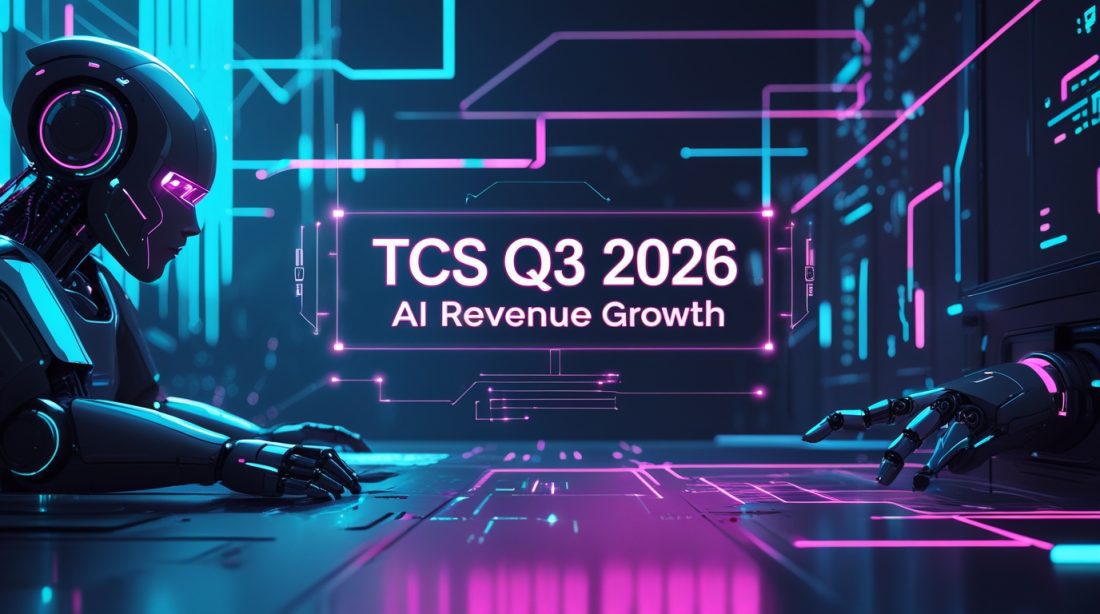
For Tata Consultancy Services (TCS), the third quarter of fiscal year 2026 and its notable TCS Q3 2026 AI revenue growth presents a narrative of strategic transition. While overall revenue growth remained modest, the explosive growth of its artificial intelligence services signaled a decisive pivot. The company reported a sequential constant currency revenue growth of 0.8%, bringing total revenue to $7.5 billion . However, the standout figure was the annualized AI services revenue, which surged 17.3% quarter-over-quarter to reach $1.8 billion. This performance demonstrates that while broader IT spending is cautious, investment in applied AI solutions, particularly those delivering clear business outcomes, is accelerating.
The financials reveal a company skillfully managing a transformation. Operating margins held stable at a healthy 25.2%, underscoring disciplined execution . Profit after tax was impacted by one-time exceptional items, including provisions related to India’s new labour code, which management clarified would have an ongoing impact of 10-15 basis points . More telling was the strength of the order book: a Total Contract Value (TCV) of $9.3 billion, with nearly half coming from North America, indicates robust future demand .
Why AI Revenue is Accelerating Faster Than Overall Growth
The disproportionate growth of AI services points to a fundamental shift in client priorities. Management commentary reveals that projects are moving from experimental proofs-of-concept to scaled implementations focused on return on investment (ROI) . Customers are no longer just exploring AI’s potential; they are funding projects designed to solve specific operational and financial challenges.
This shift is powered by TCS’s substantial investment in talent and methodology. The company now has over 217,000 associates equipped with advanced AI skills, a workforce capable of deploying solutions at scale . To accelerate delivery, TCS employs “Rapid Builds” and “Innovation Days” to help clients quickly identify high-impact AI opportunities and move them into production faster . This focus on rapid, ROI-driven projects is a direct response to market demand for tangible value, making the TCS Q3 2026 AI revenue growth a critical indicator for the broader services sector.
K Krithivasan, CEO and Managing Director of TCS, stated: “We remain steadfast in our ambition to become the world’s largest AI-led technology services company… Our AI services now generate $1.8 billion in annualized revenue, reflecting the significant value we provide to clients through targeted investments across the entire AI stack, from Infrastructure to Intelligence.”
A Strategy of Depth: Why TCS is Embedding AI in Major Client Systems
The narrative extends beyond top-line growth. TCS’s strategy focuses on deeply embedding AI capabilities within its most significant client relationships. According to an exclusive management interview, 54 of the company’s top 60 clients now have AI embedded in their operations with TCS’s help. Furthermore, the company is assisting 85-90% of its customers with annual revenues over $20 million in their AI adoption journeys.
This approach is evident in recent deal wins that go beyond generic IT services to offer AI-first transformations. For example, TCS partnered with a global industrial logistics leader to implement an AI-first operating model post-demerger, aiming to cut total cost of ownership and enhance agility . In another case, a leading US grocery retailer engaged TCS to transform its IT operations using composite AI, aiming to achieve significant automation and predictive self-healing for its systems . These are not IT maintenance contracts; they are strategic partnerships to rebuild business operations around intelligent systems.
The Future of AI Services: Focus on Full-Stack Capabilities and Infrastructure
Looking ahead, TCS is building a formidable, full-spectrum AI capability. CEO Krithivasan detailed the company’s “full-stack AI” approach, spanning from infrastructure to intelligence . This is not merely a consulting pitch; it is backed by major investments in foundational assets:
- AI-Ready Infrastructure: The strategic partnership with TPG to grow the HyperVault AI data center business aims to create gigawatt-scale facilities, providing the raw computational power needed for enterprise AI .
- Advanced Platforms: The expanded partnership with Google Cloud, including adoption of the Gemini Enterprise agentic AI platform, equips TCS’s workforce to build next-generation solutions that redefine human-AI collaboration .
- Strategic Acquisitions: The acquisition of Coastal Cloud strengthens TCS’s Salesforce and AI-led advisory capabilities, allowing it to offer more integrated business transformation services .
This integrated stack positions TCS uniquely. For a manufacturing client, TCS could theoretically design an AI model to optimize the supply chain, host the inferencing on HyperVault infrastructure, and integrate the insights into the workforce via a Google-powered agent—all under one strategic partnership. This vertical integration is the logical next step for a services giant aiming to own the entire value chain of enterprise AI.
A Fictional Anecdote for Illustration: Imagine a European automotive parts manufacturer struggling with production line downtime. A TCS team, using an “Innovate with AI” session, identifies a computer vision solution for predictive maintenance. Within weeks, a “Rapid Build” team deploys a pilot. The model is trained and hosted on TCS’s secure AI infrastructure, and the insights are fed into a dashboard for floor managers. Within a quarter, downtime drops by 15%, converting an exploratory idea into a measurable financial gain. This is the model TCS is now scaling.
Key Financial and Operational Metrics: Q3 FY26
Frequently Asked Questions (FAQs)
Why did TCS’s net profit fall 14% despite revenue growth in Q3?
The decline in reported net profit to ₹10,657 crore was primarily due to exceptional one-time charges, not operational performance. These charges included a ₹2,128 crore provision for India’s new labour code and a ₹1,010 crore provision for a legal claim . Excluding these items, the underlying profitability remained strong.
What is TCS’s “five-pillar AI strategy” mentioned by the CEO?
While the full details are proprietary, the strategy is described as comprehensive, guiding TCS’s ambition to become the world’s largest AI-led technology services company . It encompasses investments across the AI stack, from foundational infrastructure (like HyperVault data centers) and partnerships (with Google Cloud) to talent development (217,000+ skilled associates) and client solution methodologies (like Rapid Builds) .
Which industry verticals are driving the most demand for TCS’s AI services?
Demand is broad-based. Management specifically highlighted BFSI, Life Sciences & Healthcare, and Manufacturing as verticals showing strong demand . The Q3 results showed growth in Life Sciences & Healthcare (2.2% YoY) and Manufacturing (1.7% YoY) in constant currency terms .
How is TCS’s workforce transforming to support its AI ambitions?
The workforce is becoming more specialized and AI-savvy. While overall headcount has optimized to 582,163, the company has more than 217,000 associates with advanced AI skills. TCS is also doubling its intake of fresh graduates with higher-order skills, rapidly renewing its talent pool for an AI-centric future .
What does “agentic AI” mean, and how is TCS approaching it?
Agentic AI refers to systems where AI agents can autonomously perform multi-step tasks, make decisions, and communicate with other agents. TCS is progressing cautiously, citing the need for robust governance . Its partnership with Google Cloud on the Gemini Enterprise platform is a key step, providing tools to build and orchestrate such advanced agents for complex enterprise workflows .
Fats Facys
TCS Q3 2026 AI revenue growth defines its strategic pivot: a 17.3% surge to $1.8B masks modest overall growth. The future is AI-led transformation, embedding ROI-focused solutions in major clients via full-stack investment and a 217,000-strong AI-skilled workforce.
Interested in deeper analysis of how industrial enterprises are leveraging AI for operational transformation? Subscribe to our newsletter for monthly insights, exclusive case studies, and strategic breakdowns of the technologies reshaping manufacturing, logistics, and energy.
Further Reading & Related Insights
- Multiverse’s AI Training Revenue Growth → Complements TCS’s story by showing how AI training providers are also experiencing revenue surges amid profitability pressures.
- Strategic AI Infrastructure Investment → Connects directly to TCS’s HyperVault and full-stack AI strategy, highlighting infrastructure as the backbone of scalable AI services.
- Oracle Warning: Industrial AI Investment ROI Challenges → Reinforces the importance of ROI-driven projects, echoing TCS’s pivot toward measurable business outcomes.
- Industrial AI Business Transformation Service → Explores AI-led enterprise transformation services, aligning with TCS’s embedding of AI into major client systems.
- The Rise of the Industrial AI Data Marketplace → Provides context on how data ecosystems fuel AI adoption and revenue growth, complementing TCS’s full-stack approach.