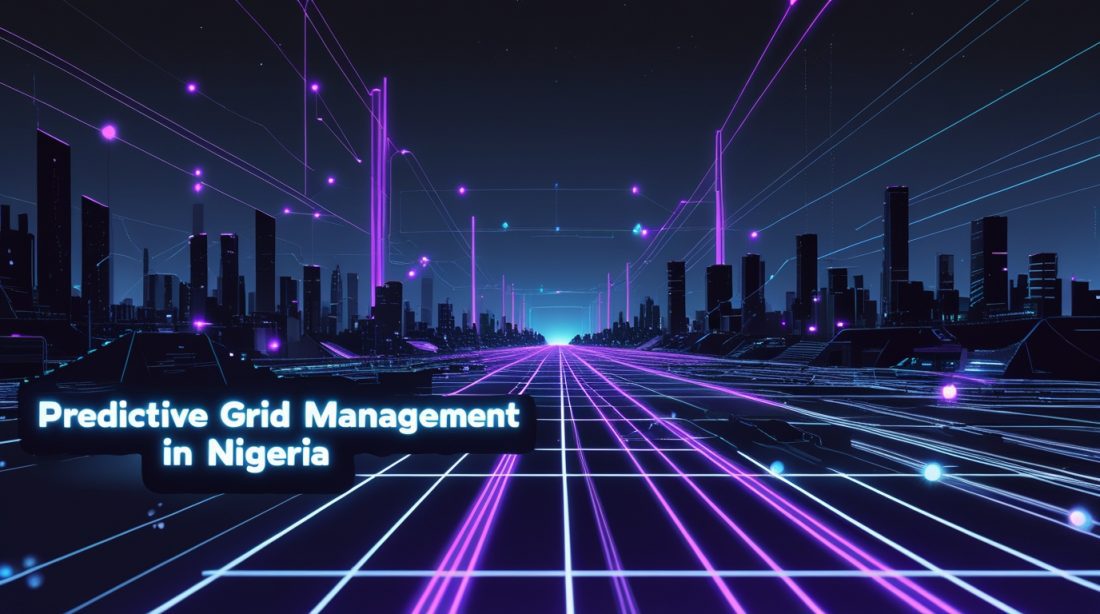
The Nigerian industrial sector lost an estimated ₦10.5 trillion in 2023 due to erratic power supply. In 2026, the critical solution for delivering this resilience is Predictive Grid Management in Nigeria, powered by digital twin technology. The strategic convergence of Artificial Intelligence (AI) and the Internet of Things (IoT) is moving beyond basic connectivity to intelligent, autonomous systems capable of analyzing data and acting at the edge. At the heart of this transformation for Nigeria’s power sector is the implementation of digital twins, making predictive grid management a tangible, operational reality.
A digital twin is far more than a simple digital schematic; it is a dynamic, virtual counterpart of a physical asset or system, synchronized through real-time sensor data and AI. For a national grid where over 60% of the population has access to electricity, with even those connected receiving less than seven hours of average daily supply, this technology shifts the paradigm from reactive crisis management to proactive, intelligence-driven operations. This analysis argues that deploying digital twins is not merely an IT upgrade—it is a foundational requirement for Nigeria’s industrial competitiveness, enabling predictive maintenance, seamless integration of renewables, and the creation of entirely new, data-driven business models within the energy value chain.
Why Predictive Grid Management in Nigeria Is Critical for Energy Security
Nigeria’s energy structure—generation, transmission by the government-owned TCN, and privatized distribution—is under severe strain from transmission bottlenecks, aging infrastructure, and a chronic demand-supply imbalance. Jide Awe, an ICT expert, notes a significant and growing demand for intelligent IoT applications specifically in Nigeria’s power sector. Digital twins directly address this by creating a living model of the entire grid.
This virtual model allows engineers to monitor asset health in real-time, simulate stress scenarios, and predict failures before they cause widespread outages. For instance, a digital twin of a transmission substation can analyze data from sensors monitoring transformer temperature, vibration, and load. AI algorithms can then predict insulation degradation, scheduling maintenance during low-demand periods to prevent a catastrophic failure that could plunge a region into darkness. This predictive capability is crucial because, as noted in analysis of global trends, 75% of enterprise-managed data will be created and processed outside of core data centers this year, at the “edge”—precisely where grid infrastructure operates. Processing this data locally through edge computing, integrated with the digital twin, enables real-time decision-making even in areas with poor cloud connectivity.
How This Technology Drives Revenue and Cuts Industrial Costs
The financial argument for digital twins is compelling for both utilities and industrial consumers. For Distribution Companies (DisCos), predictive grid management means reducing massive technical and commercial losses. By precisely identifying and modeling loss hotspots—whether from faulty equipment or unauthorized taps—utilities can prioritize interventions with the highest return. Furthermore, digital twins enable more effective integration of decentralized renewable energy sources and embedded generation, allowing DisCos to manage a complex, multi-source grid reliably and potentially offer new grid-balancing services.
For Nigeria’s manufacturing and heavy industries, unreliable power is a primary cost center, forcing reliance on expensive diesel generators. A more stable grid, enabled by digital twin insights, directly translates to lower operational expenses and higher productivity. A food processing plant, for example, could leverage grid stability forecasts from a national digital twin initiative to optimize its production schedule, running energy-intensive chilling operations during periods of guaranteed grid stability. This synergy between grid-level intelligence and industrial planning is where significant value is created. It aligns with the broader shift where competitive advantage will depend on coordinating AI ecosystems across hybrid environments.
The Path to Implementation: Infrastructure, Policy, and Partnerships
The potential is clear, but deployment at scale requires a concerted strategy. The foundational need is data, captured by IoT sensors across generation plants, transmission lines, and substations. This requires investment in edge computing infrastructure suited to Nigeria’s environment, capable of local data processing to ensure resilience.
Policy must create an enabling environment. This includes:
- Regulatory Sandboxes: Allowing utilities to pilot digital twin and virtual power plant technologies, as seen in Singapore’s SP Group project, which aggregates decentralized resources to function as a single, reliable plant.
- Data Governance: Clear frameworks under laws like the Nigeria Data Protection Act 2023 for securing the vast amounts of operational data flowing through digital twins.
- Investment Alignment: As emphasized in Nigeria’s 2026 ICT outlook, long-term success depends on sustained infrastructure investment, reliable power supply, and broadband expansion.
Finally, strategic partnerships are essential. Nigeria can leverage global expertise while building local capacity. Collaborations akin to the Siemens-NVIDIA partnership to build an “Industrial AI operating system” could provide a blueprint. Simultaneously, fostering local tech ecosystems to develop and maintain these systems is crucial for sovereign AI capabilities, ensuring the nation retains control over its critical digital infrastructure.
Fast Facts
Predictive Grid Management in Nigeria, enabled by digital twin technology, is a strategic imperative in 2026. It moves the energy sector from crisis response to AI-driven foresight, directly reducing industrial costs caused by outages and unlocking new revenue streams through optimized grid operations and integrated renewables. Success hinges on investing in sensor and edge computing infrastructure, enacting supportive policies, and forging strategic tech partnerships.
FAQ: Digital Twins and Nigeria’s Energy Infrastructure
- What is a digital twin in simple terms?
A digital twin is a live, virtual copy of a physical object or system. For the power grid, it’s a software model that mirrors the real network using real-time data from thousands of sensors, allowing operators to monitor, analyze, and simulate improvements virtually. - How can this technology reduce power outages in Nigeria?
By enabling predictive maintenance. The digital twin uses AI to analyze sensor data (like temperature and vibration) to forecast equipment failure before it happens. Utilities can then schedule repairs proactively, preventing many outages that currently occur due to unexpected breakdowns of aging infrastructure. - Does Nigeria have the digital infrastructure needed for this?
Building it is a key part of the challenge and the opportunity. It requires deploying IoT sensors across the grid and investing in edge computing, which processes data locally and is well-suited to regions with connectivity challenges. This infrastructure build-out itself drives digital transformation and creates skilled jobs. - Who should fund and implement these digital twin systems?
Implementation requires a public-private partnership (PPP) model. The government and regulators (like NERC) must set the policy framework. The Transmission Company of Nigeria (TCN) and Distribution Companies (DisCos) would be primary users. Funding and technical expertise could come from a mix of utility investment, international development financing, and partnerships with technology firms.
Stay Ahead of the Industrial AI Curve.
The integration of technologies like digital twins is reshaping African industries at an unprecedented pace. Subscribe to our newsletter for monthly, in-depth analyses on how AI, IoT, and predictive technologies are driving efficiency, revenue, and competitive advantage across the continent’s key sectors.
Further Reading & Related Insights
- AI-Powered Predictive Maintenance in Nigeria
Directly complements predictive grid management by showing how AI-driven maintenance reduces outages, costs, and equipment failure across Nigerian infrastructure. - Strategic AI Infrastructure Investment
Expands on the investment alignment argument, explaining why long-term AI and data infrastructure funding is critical for national-scale systems like power grids. - How AI Boosts Predictive Maintenance ROI in 2025
Strengthens the financial case by quantifying ROI gains from predictive analytics—highly relevant to utilities and industrial energy consumers. - Schneider Electric AI Data Center Infrastructure
Provides global context on resilient, AI-ready infrastructure that underpins digital twins, edge computing, and real-time grid intelligence. - The Rise of the Industrial AI Data Marketplace
Extends the article’s revenue narrative by showing how operational data from grids and infrastructure can evolve into monetizable, strategic assets.