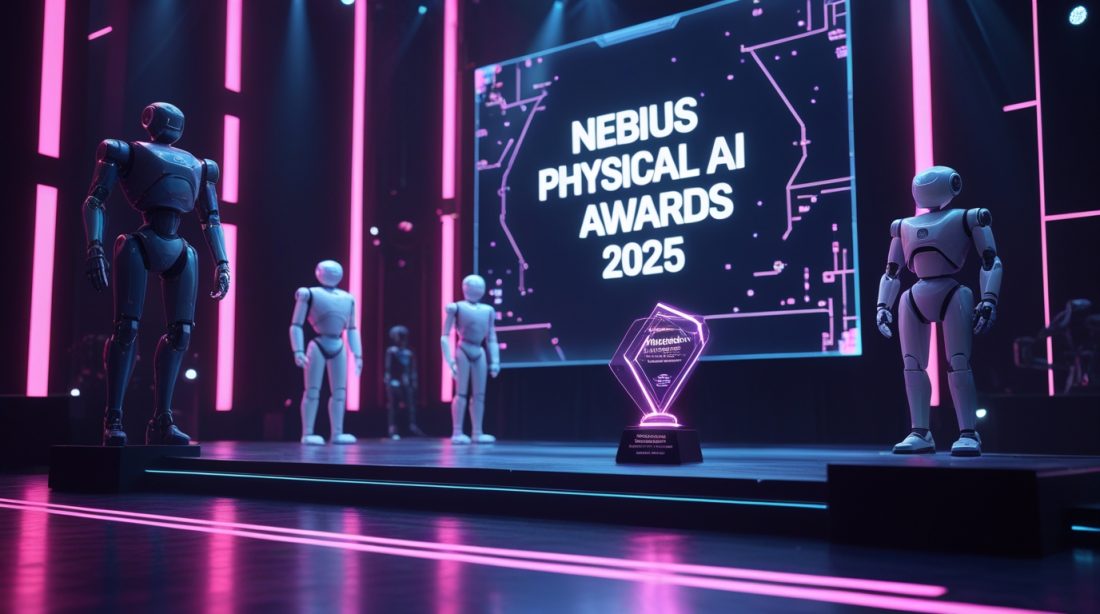
Nebius Physical AI Awards 2025 represents more than a simple competition; it’s a targeted intervention in the industrial automation landscape. By awarding $1.5 million in high-performance cloud credits to 16 startups from over 250 global applicants, Nebius is directly tackling the most significant bottleneck for early-stage ventures: access to the immense computational power required to train and simulate real-world AI systems. This move signifies a strategic bet that the future of industrial productivity hinges on nurturing startups that can bridge the gap between digital intelligence and physical execution.
Why Nebius Is Betting on Computational Credits Over Cash
For a startup developing AI for a physical task, like robotic assembly or warehouse logistics, the cost of computation is often a prohibitive barrier. Training robust AI models requires thousands of hours in simulation, and real-world testing is expensive and slow. Nebius’s decision to offer its AI Cloud credits, accelerated by NVIDIA infrastructure, is a deliberate strategy to provide the exact resource these companies need most.
“We understand exactly what these teams need at the infrastructure layer to overcome their toughest challenges,” said Evan Helda, Nebius’s Head of Physical AI. “We’re removing the barriers that slow them down”.
This approach reflects a mature understanding of the market. A direct cash prize helps with operational costs, but compute credits enable the intensive R&D that defines a startup’s core technological edge. It also strategically aligns the winners with Nebius’s platform, fostering long-term relationships with the next generation of potential enterprise clients.
Why the Award Categories Reveal the Future of Automation
The selection of winners across five specific categories provides a clear roadmap of where industry experts see the most immediate potential and critical needs. These categories move from enabling technologies to full-scale deployment.
The following table summarizes the strategic focus of the key categories and their winning companies:
This structure highlights a crucial insight: the path to scalable physical AI requires parallel advances. Breakthroughs in foundational software (like robot brains) must be coupled with robust tools for testing (simulation) and proven use cases that deliver economic value (deployment).
Why Building an Ecosystem is as Crucial as Funding
The event was designed as a summit, not just a ceremony. Bringing together 300+ researchers, investors, and industry leaders from firms like NVIDIA, ABB, and Khosla Ventures creates a vital network effect. For a startup, connections to potential partners, pilot customers, and future investors are invaluable.
“Accelerating physical AI requires a convergence of advanced simulation, model training, and AI infrastructure,” noted Amit Goel, NVIDIA’s Head of Robotics and Edge Computing Ecosystem.
This convergence is not just technical but social. By fostering this community, Nebius is helping to crystallize industry standards, share best practices, and accelerate the overall pace of adoption. This ecosystem-building is a powerful multiplier on the investment in compute credits.
Why This Signals a Shift in Industrial Technology Adoption
This initiative reflects a broader trend where critical industrial innovation is increasingly driven by agile startups rather than only by internal R&D at large manufacturers. These startups can move quickly to solve niche but high-value problems, from warehouse inventory drones to simulation platforms for construction.
The strategic investment from Shanda Ventures in Buildroid AI further validates this model, showing that venture capital sees a clear path from targeted infrastructure support to commercial growth. For industrial leaders, the implication is clear: the future toolkit for automation—whether for addressing global labor shortages or boosting energy efficiency—will likely be sourced from this vibrant startup ecosystem. Engaging with and piloting solutions from this cohort is becoming a strategic imperative.
FAQs: Nebius Physical AI Awards 2025
Who were the main winners of the Nebius Physical AI Awards 2025?
What was the total value of prizes awarded at the summit?
How does this event fit into the broader robotics and AI trend for 2025?
The event directly supports the #1 trend identified by the International Federation of Robotics for 2025: the integration of AI into robotics. It specifically fosters “Physical AI,” where robots use AI to learn from experience and operate in unpredictable environments, moving beyond simple, pre-programmed tasks.
What are the criteria used to judge the competing startups?
Where can I find more information about Nebius’s support for AI startups?
You can learn more about the Nebius for Startups program at their official website: nebius.com/startups. Details on their dedicated infrastructure for physical AI and robotics companies are available at nebius.com/solutions/physical-ai-and-robotics.
Get Ahead of the Automation Curve
The strategies and technologies funded today will define industrial competitiveness tomorrow. Subscribe to the CreedTec Insights newsletter for monthly analysis on pivotal shifts in physical AI, robotics deployment, and the startup ecosystem driving industrial transformation. Get the context behind the headlines.
Further Reading & Related Insights
- Generative AI Systems at Art Basel → Explores how generative AI systems reshape creative markets, connecting to Nebius’s focus on industrial AI transformation.
- AI Agent Automating Desktop Tasks → Examines how agentic AI moves from chat to direct action, relevant to startups building scalable automation.
- Industrial Robot Rental Costs Slashed → Shows how lowering costs democratizes robotics adoption, echoing Nebius’s strategy of removing infrastructure barriers.
- Managing Orphaned AI Models: Industrial Risk → Discusses governance and sustainability in AI adoption, complementing Nebius’s emphasis on trust and ecosystem building.
- Three Lives of a Robot: Industrial AI → Provides a narrative on the lifecycle of industrial AI systems, aligning with Nebius’s vision of long-term deployment and ROI.