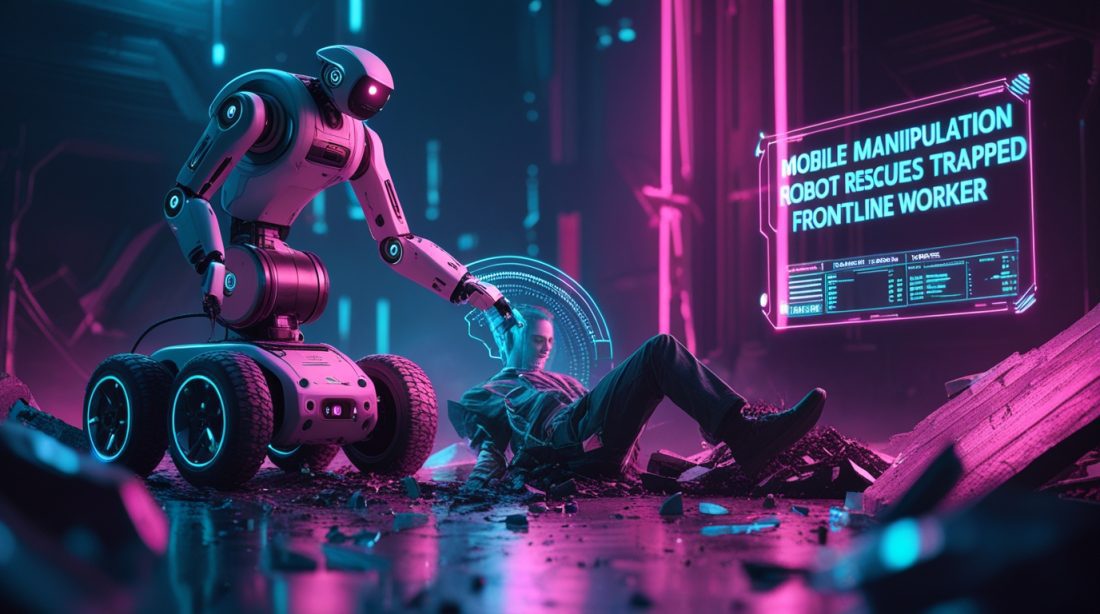
For an entire month, a critical failure trapped a frontline worker’s productivity on a stalled assembly line, leaving him unable to complete his core tasks. The solution didn’t come from a team of technicians or a major retrofit. It arrived on wheels: a mobile manipulation robot named Dex, designed to navigate tight factory floors and perform complex tasks with human-like dexterity. This incident is more than a story of clever engineering; it’s a clear signal that the industrial AI narrative for 2025 is shifting from stationary data analysis to embodied, action-oriented intelligence. The focus is moving from simply seeing problems to physically solving them on the chaotic, human-centric front lines of industry.
Why This Rescue Story Matters for Manufacturing Today
The trapped worker scenario is not an anomaly but a symptom of a wider, systemic challenge. Frontline employees, who make up approximately 70% of the manufacturing and logistics workforce, are often underserved by the very technology transforming their industries. While investments pour into back-end automation and predictive analytics, the daily physical and logistical hurdles on the shop floor persist. Labor shortages and an aging workforce amplify these pain points, creating situations where a single point of failure can halt valuable human capital.
Deploying a wheeled mobile manipulator in this context reveals a pragmatic evolution in robotics. Unlike bipedal humanoids that prioritize form, these systems prioritize function and reliability. For instance, the Dex robot, with its wheeled base, was engineered for continuous 4+ hour operation, significant payload capacity, and, crucially, safe navigation in tight, human-populated spaces. This design philosophy—choosing wheels over legs for stability and efficiency—directly addresses the “trapped worker” problem by providing a flexible tool that can be dispatched where and when it’s needed, not just where a fixed robot arm is installed.
Table: The Practical Advantages of Wheeled Mobile Manipulators in Industrial Settings
Why Mobile Robots Are Becoming Indispensable Partners
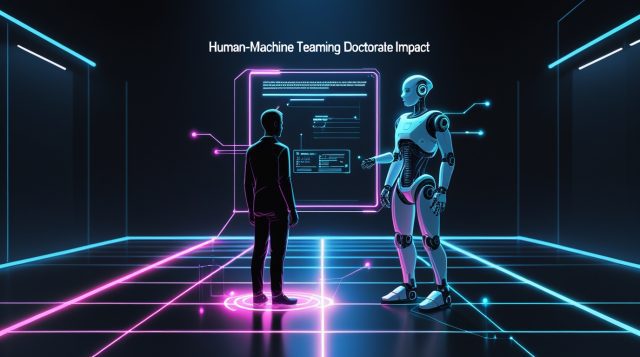
The transition towards mobile manipulation robots aligns with the broader industrial trend known as Industry 5.0, which emphasizes human-machine collaboration over mere automation. The goal is not to replace workers but to augment their capabilities and free them from dangerous, tedious, or physically limiting tasks.
Matt Casella, President of Richtech Robotics, explains the mission clearly: “Rather than displacing workers, we’re filling positions that remain persistently vacant… Our robots enable existing staff to engage in higher-value activities that require human judgment and empathy“.
This collaborative approach is key to adoption. Successful implementations often involve frontline workers in the process, allowing them to identify which tedious or ergonomically challenging tasks should be automated first. The result is a cultural shift where robots are viewed as team members. As one industry observer noted after visiting a plant, workers eventually gave their collaborative robots names and treated them like “slightly incompetent coworkers,” a sign of successful integration.
Why This Shift Is Accelerating Now: Data, AI, and Urgent Need
The viability of these systems in 2025 is powered by a convergence of technologies. At the hardware level, advanced sensors, force-limited joints, and vision systems allow robots to perceive and interact with unpredictable environments safely. Software advances are equally critical. The integration of real-time AI vision and decision-making, often powered by platforms like NVIDIA’s Jetson, allows these robots to handle variable tasks—like picking mixed parts from a bin—without extensive pre-programming.
This evolution is a natural progression within industrial AI. While only about one-third of organizations report scaling AI across the enterprise, high-performing companies are nearly three times more likely to have fundamentally redesigned individual workflows around AI capabilities. Mobile manipulation represents the physical execution layer of this redesign. It takes the insights from predictive analytics (e.g., “this machine will fail”) or production planning (e.g., “parts are needed at Station B”) and closes the loop with physical action.
Furthermore, the Robot-as-a-Service (RaaS) business model is making this technology accessible without massive capital expenditure. Companies can deploy a mobile manipulator to solve a specific bottleneck, like the stalled assembly line, scaling their use of automation in a targeted, justifiable way.
FAQs: Industrial Mobile Manipulation Robots
Q: What exactly is a mobile manipulation robot?
A: It’s a robotic system that combines a mobile base (typically wheels or tracks) with one or more robotic arms (manipulators). This allows it to move freely through a facility to perform physical tasks like picking, placing, assembling, or machine tending at multiple locations.
Q: How do these robots navigate safely around human workers?
A: They use a combination of technologies including LiDAR, 3D vision cameras, and onboard AI to map their environment in real-time, detect obstacles (including people), and plan collision-free paths. They are built to ISO safety standards for collaborative operation.
Q: What’s the typical cost and ROI for a system like this?
A: While specific costs vary, a complete mobile manipulation workstation can range from $50,000 to $100,000+.
Many providers offer a Robot-as-a-Service (RaaS) model with a monthly fee. ROI is often realized within 12-18 months through increased productivity, reduced downtime, and redeployment of skilled labor to higher-value work.
Q: Can they be integrated with existing factory machinery and software?
A: Yes, but integration can be a challenge. Modern systems are designed with APIs and support for common industrial communication protocols. However, connecting to very old legacy equipment may require custom software solutions.
The Strategic Takeaway for Industry Leaders
The story of the worker and the wheeled robot is a microcosm of the next phase of industrial AI. The frontier is no longer just in the cloud or the dashboard; it’s on the factory floor, in the warehouse aisle, and at the point of physical need. The companies realizing the most value from AI are those using it to drive transformative change in core operations.
Investing in mobile manipulation technology is an investment in operational resilience. It addresses acute labor pressures, mitigates the risk of single points of failure, and unlocks the full potential of a human workforce by offloading the tasks that machines do best. As these systems become more capable and their operational data more valuable, they will evolve from task-specific tools into intelligent partners that learn and adapt.
The question for industrial leaders in 2025 is not if this technology will become standard, but how quickly they can harness it to empower their most valuable asset: their people. The robot on wheels isn’t just coming to the rescue; it’s paving the way for a more collaborative, flexible, and productive future.
TL;DR: A frontline worker, stuck for a month by a stalled process, was freed by a wheeled robot. This real-world fix highlights 2025’s key industrial shift: AI is moving from data analysis to physical problem-solving. Mobile manipulation robots address urgent labor gaps, enhance human work, and offer flexible automation. Their rise signals that the next competitive edge in manufacturing is action-oriented, embodied intelligence.
To stay ahead of how embodied AI and robotics are transforming industrial operations, subscribe to our newsletter for exclusive analysis and case studies.
Further Reading & Related Insights
- Industry 5.0 Adoption Challenges in Nigeria → Connects directly to the human-centric Industry 5.0 framework, which underpins the collaborative role of mobile robots.
- Alexa+ Greetings Industrial AI Application → Shows how industrial AI principles migrate into consumer devices, paralleling embodied AI moving onto factory floors.
- China Domestic Robot Training Base 2025 → Highlights global infrastructure for robot training, relevant to scaling mobile manipulation systems.
- Three Lives of a Robot: Industrial AI → Explores the lifecycle of industrial robots, aligning with the evolution from fixed arms to mobile manipulators.
- How Human-in-the-Loop Workflows Save Millions → Reinforces the collaborative model where robots augment, rather than replace, human workers.