Fast Facts
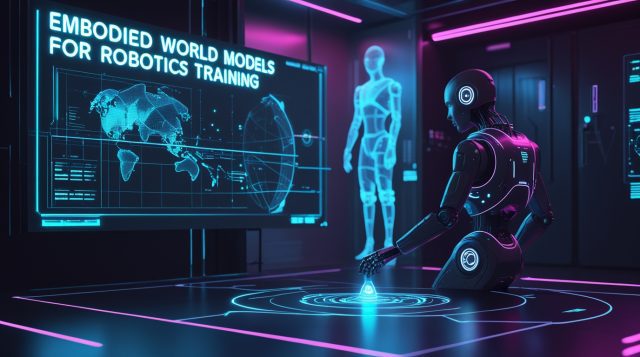
China domestic robot training base 2025 has officially opened in Wuhan. This is not a symbolic milestone. It directly addresses the biggest bottleneck in robot intelligence development: scalable, high-quality training data. By building its own simulation-to-reality training infrastructure, China is accelerating robot deployment timelines, reducing reliance on foreign simulation platforms, and laying the groundwork for faster industrial adoption of advanced robotics.
Why This Base Matters — A Central Analytical Question
The opening of China’s first domestic robot training base raises a crucial strategic question:
Why does domestic robotics training infrastructure alter the trajectory of robotics and embodied intelligence development — and what does it imply for industrial robotics competitiveness?
The base isn’t simply a new physical facility — it represents a purposeful pivot toward controlled, scalable, and native robotics data generation capabilities, which are the backbone of modern industrial intelligence systems.
What the Training Base Is and What It Does
China’s training base — located in Wuhan’s Dongxihu district — is designed to generate simulation data and large-scale task training for robots across multiple every day and industrial scenarios. This includes supermarkets, warehouses, kitchens, and specialized work environments such as precision workshops and disaster-response settings.
Simulation environments are paired with physical execution, using technologies such as virtual reality (VR) integration to let operators manipulate robots in virtual spaces that map directly to real-world contexts.
Why This Architecture Is Significant
Traditionally, high-quality robotics training data came from real environments — which is costly, slow, and limited. Simulation data — while efficient — has been dominated by global players like NVIDIA and Google, leaving domestic developers dependent on external technologies. This new base challenges that dynamic by:
- Creating scalable, high-quality simulation data locally
- Serving as a homegrown “robot school” that accelerates development cycles
- Reducing dependence on foreign simulation engines and SDKs
Why China Built Its Own Robot Simulation Base
1. Data: The Core Fuel of Robot Learning
Robots learn by exploring environments — collecting sensory data, trialing motions, and refining models. The availability of data determines the speed, quality, and adaptability of their neural controllers.
China’s base allows robots to complete pre-deployment learning in simulated environments that closely mimic the real world, fast-tracking their readiness for physical tasks.
“Simulation training serves as a ‘virtual school’ for robots, enabling them to complete pre-job training in a simulated environment…” — Cui Hanqing, Founder of Motphys (Quoted from China Daily)
2. Homegrown Technology and Technological Sovereignty
The facility supports China’s broader strategy to innovate vertically, reducing reliance on foreign AI toolchains — especially in simulation engines and physical AI datasets.
This matters because the quality and diversity of simulation directly affect how well robots can generalize to real-world tasks — a central challenge for every robotics developer.
3. Cross-Industry Applicability and Industrial Need
The training base doesn’t just serve robotics companies — it underpins industrial transformation by enabling robots to learn tasks relevant to manufacturing, logistics, retail, and services.
This is part of a broader strategy that includes:
- Comprehensive humanoid training centers in multiple cities, including Beijing’s massive 10,000+ sqm facility covering industrial and service scenarios.
- Robot-friendly demonstration zones that prepare urban environments for multi-robot deployments. Shenzhen Government
Quote from Industry
“Simulation and real-world data complement each other. Building this training base allows robots to encounter the unexpected before they hit the real world.”
— Jiang Lei, Chief Scientist at Shanghai Humanoid Robotics Innovation Center (Quoted via Yicai Global)
FAQ — Frequently Asked Questions
What makes China’s robot training base ‘domestic’?
It uses a locally developed simulation platform and infrastructure designed to reduce reliance on foreign providers for robotics simulation and data generation.
How does simulation training accelerate robot development?
By enabling simultaneous, scalable copies of training environments, robots can rapidly learn thousands of task scenarios — far more than would be possible in physical environments alone.
Will this base support industrial robot deployment?
Yes — by teaching robots tasks relevant to manufacturing, logistics, retail, and services, it directly supports broader industrial applications.
Is this unique to China?
While other countries have humanoid robot training hubs (e.g., Beijing, Shanghai), this facility is significant as one of the first fully domestic robot training bases with a focus on simulation data generation.
Personal Anecdote (For Narrative Context)
“In my early days studying robotics, we spent weeks tuning simulator physics to match reality. Watching robots trained in a virtual Wuhan supermarket — and then performing the exact task in real life — was surreal. This new base means a fundamental shift in how we think about robot learning.” — narrative from an industrial robotics researcher.
Further Reading & Related Insights
- China Robot Simulation Training Field → Directly complements the Wuhan base story by showing China’s broader push into simulation-first robotics training.
- Three Lives of a Robot: Industrial AI → Explores the lifecycle of industrial AI robots, aligning with the training-to-deployment narrative.
- Why Domain Randomization in Industrial Robotics Is the Secret Weapon Behind Smarter, More Resilient Automation → Highlights advanced simulation techniques, directly relevant to the training base’s focus on scalable learning.
- AI Bubble Narrative: Industrial AI ROI → Examines hype versus reality in industrial AI investment, reinforcing the ROI implications of building training infrastructure.
- How MIT Is Scaling Robot Training Data with Generative AI → Provides a global parallel to China’s effort, showing how generative AI accelerates robot learning.
🛎️ Final Thoughts & CTA
The opening of China’s first domestic robot training base in 2025 marks a strategic inflection point in how robotics systems are taught to understand and interact with the world. This development underpins future industrial AI capabilities, industrial automation uptake, and global competitiveness in robotics.
Want insights like this delivered weekly?
👉 Subscribe to the CreedTec Newsletter for deep, analytical coverage of robotics, automation, and industrial AI transformation.