Last Updated March 2026
Fast Facts — Key Takeaways
The AI deepfakes dark side in 2026 is well documented for Western enterprises. What is almost completely undiscussed is why the threat hits emerging market businesses — in Nigeria, across Africa, and throughout Southeast Asia — with significantly higher force and significantly lower defence capability.
- In relationship-based business cultures, trust is built on knowing someone’s face and voice — exactly what deepfake technology now replicates perfectly.
- Deepfake-as-a-Service platforms cost as little as $50/month — accessible to any criminal with a target and a motive, regardless of geography.
- 1,100 deepfake fraud attempts were recorded against a single prominent Indonesian financial institution — showing Asia Pacific is already in the crosshairs.
- Nigerian and African enterprises run most financial approvals through relationship-verified channels — WhatsApp voice notes, video calls, phone instructions — all now replicable by AI.
- Non-consensual deepfake content increased 1,780% between 2019 and 2024, according to the NPCC — signalling how fast the technology has been weaponised beyond financial fraud.
- The identity verification infrastructure gap in emerging markets means the last line of defence — human judgment — is exactly what deepfakes are designed to defeat.
The AI deepfakes dark side in 2026 is being discussed extensively in Western enterprise security circles — Hong Kong CFO frauds, Silicon Valley detection arms races, European regulatory frameworks. What that conversation is almost entirely missing is the dimension that matters most for businesses across Nigeria, West Africa, and Southeast Asia: deepfakes hit hardest where trust is built on relationships, not systems. And that describes most of how business gets done across emerging markets.
This is the argument that every analysis of the deepfake threat gets wrong by omission: the vulnerability is not primarily technical. It is cultural. In markets where a voice on the phone or a face on a video call carries the weight of institutional trust — where relationships are the verification system because formal identity infrastructure is weak or inconsistently enforced — deepfake technology does not bypass a security system. It bypasses the entire trust architecture that business runs on.
Understanding that distinction is the starting point for building any defence that actually works in an emerging market context. And it is a distinction that no cybersecurity vendor selling enterprise deepfake detection tools to Lagos or Nairobi is currently acknowledging in their product literature.
The Relationship Trust Gap — How Business Culture Becomes the Attack Surface
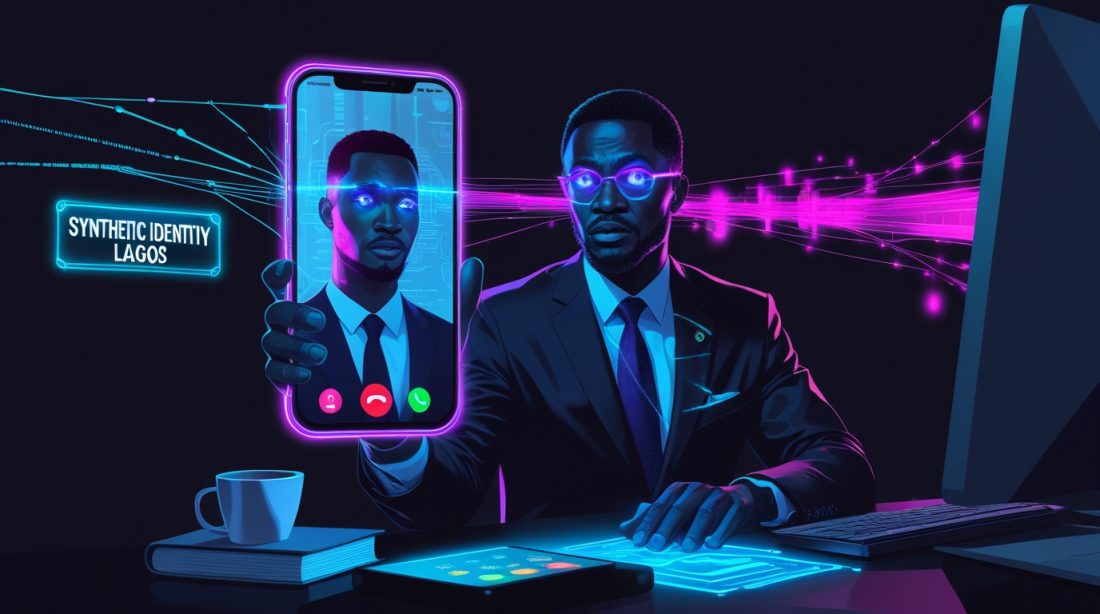
In most Nigerian enterprises and across Sub-Saharan Africa, financial authorisation does not run through cryptographic multi-factor systems. It runs through relationships. A CFO approves a payment because the CEO’s voice on a WhatsApp message sounds right. A finance manager wires funds because the director’s face on a video call looks familiar. A procurement officer releases an order because the supplier’s representative sounds exactly like the person they’ve worked with for three years.
These are not failures of process — they reflect how trust operates in environments where formal verification systems are slower, less reliable, or simply not embedded in daily workflow. But according to MSSP Alert’s 2026 threat analysis, deepfake technology now requires as little as three seconds of audio to produce an 85% voice match. It can replicate facial micro-expressions, tone of voice, and conversational style convincingly enough that even trained professionals struggle to identify synthetic media.
The implication is direct: every relationship-verified approval workflow — the WhatsApp voice note from a supplier, the video call from a partner, the phone instruction from a CEO — is now a potential attack surface. The trust architecture that relationship-based business cultures built over decades is the exact vulnerability that deepfake technology is designed to exploit.
“In 2026, deepfake-driven fraud will explode as the technology becomes even more accessible and convincing. Organizations are simply not prepared for this new threat landscape, and the awareness gap around AI-powered attacks is dangerously wide.”
— Keatron Evans, VP of Portfolio Product and AI Strategy, Infosec Institute, 2026
$50/moCost of Deepfake-as-a-Service subscription platforms in 2026 — removing every technical barrier that previously limited deepfake attacks to sophisticated, well-resourced threat actors
The Asia Pacific Signal — What 1,100 Attacks on One Indonesian Bank Tells the Rest of the Region
The deepfake threat to emerging markets is not theoretical. According to MEA Integrity’s 2026 deepfake threat report, a single prominent Indonesian financial institution recorded 1,100 deepfake fraud attempts to bypass its identity verification systems. One institution. One year. Over a thousand synthetic identity attacks.
Indonesia sits in the middle of Southeast Asia’s digital financial services boom — one of the most dynamic emerging market digital economies in the world. The 1,100 attacks confirm what the Western enterprise deepfake narrative consistently omits: the threat is already concentrated in markets where digital financial services are growing fastest and identity verification infrastructure has not kept pace with transaction volume.
Nigeria’s digital financial ecosystem mirrors this pattern precisely. According to Medium’s 2026 deepfake risk analysis, WhatsApp forwards, short-form video platforms, and regional language content spread rapidly across emerging markets — making debunking deepfakes a race against time that detection infrastructure is losing. Authorities have increased digital surveillance and partnered with social media platforms, but detection still lags significantly behind creation.
The combination is dangerous: fast-moving digital financial transactions, relationship-verified approval workflows, limited formal identity infrastructure, and a deepfake technology curve that has made synthetic impersonation accessible to any criminal for $50 a month. This is the specific risk profile that Nigerian and West African enterprises are carrying into 2026 — largely without acknowledging it.
The Infrastructure Gap — Why Standard Enterprise Deepfake Defences Don’t Transfer to Emerging Markets
Every major cybersecurity vendor selling deepfake detection in 2026 is designing for enterprises with established multi-factor authentication, formal identity management systems, and security operations teams capable of deploying and monitoring AI-driven detection tools. According to Cyber Magazine’s deepfake defence analysis, effective 2026 deepfake defence requires real-time multi-layered identity intelligence — analysing not just synthetic media but compromised devices, injected virtual cameras, and broader AI-driven fraud signals simultaneously.
That technology stack is not unrealistic for a Tier 1 bank in Singapore or a Fortune 500 enterprise in London. It is largely inaccessible for a mid-size manufacturing firm in Kano, a trading company in Lagos, or a financial services provider in Nairobi — not because the technology does not exist but because the organisational infrastructure to deploy and operate it does not yet exist at the scale required.
The result is a two-tier deepfake threat landscape. In the first tier: enterprises with formal identity systems, trained security teams, and detection tool budgets who are still struggling to keep pace with deepfake generation capabilities. In the second tier: enterprises whose only deepfake defence is the human judgment of the person receiving the call — which is precisely what deepfakes are designed to defeat.
Most Nigerian and African enterprises currently operate in the second tier. That is not a permanent condition — it is a window of maximum exposure during which the deepfake threat is growing faster than the defence infrastructure. Understanding this is the prerequisite for building responses that actually address the real risk rather than importing Western enterprise frameworks that do not fit the operational context.
⚠ Fiction — Illustrative Scenario
A Lagos-based manufacturing company has a long-standing relationship with a Singaporean raw materials supplier. The relationship has run for six years. Financial approvals for orders above ₦50 million require CFO confirmation — typically delivered via WhatsApp voice message because the CFO travels frequently and video calls are unreliable on Nigerian network infrastructure. In March 2026, a threat actor — working from publicly available LinkedIn audio and video of the CFO from a conference appearance — generates a convincing voice clone and sends a WhatsApp voice message to the procurement manager authorising an urgent payment of ₦180 million to a new account number “due to banking changes.”
The voice is perfect. The urgency framing is familiar. The payment is processed. The CFO never sent the message. The company’s approval workflow had no out-of-band verification requirement because the CFO’s voice had always been sufficient. This scenario is speculative and illustrative but reflects the exact attack pattern the Indonesian bank case and the Hong Kong CFO fraud document — adapted to the specific approval workflow patterns common in Nigerian enterprise environments.
The Battle for Truth in Emerging Markets — When Seeing and Hearing No Longer Means Believing
Beyond financial fraud, the deepfake threat carries a second dimension that is particularly acute in markets with politically sensitive environments and strong social media penetration. The 2026 International AI Safety Report’s concept of “truth decay” — where synthetic media erodes baseline trust in all digital content — plays out differently in markets like Nigeria than in Western contexts.
According to MEA Integrity, non-consensual deepfake content increased 1,780% between 2019 and 2024. The same technology used to impersonate a CFO can be used to create reputational attacks against business leaders, generate false evidence in commercial disputes, and undermine the credibility of legitimate communications during critical negotiations.
For enterprises across Africa and Southeast Asia operating in environments where legal recourse for digital fraud is slower and less certain than in Western jurisdictions, the reputational and commercial consequences of a deepfake attack compound beyond the immediate financial loss. A fake video of a CEO making damaging statements, circulated on WhatsApp across a business community, can damage supplier and customer relationships that took years to build — and the correction never fully catches up with the original damage.
The McKinsey Lilli breach demonstrated that even the most resourced enterprises deploy AI systems with governance gaps that attackers exploit. The deepfake threat in emerging markets operates through a different but analogous gap: trust infrastructure deployed without the verification layer that the threat environment now requires.
Understanding the broader pattern of how autonomous AI systems are reshaping enterprise security globally makes clear that the deepfake problem is not separate from the AI transformation narrative — it is a direct consequence of it. The same capability improvements that make AI useful for enterprise automation make AI dangerous for synthetic impersonation.
The Specific Risk Profile for Nigerian and West African Enterprises
Nigeria’s business environment combines several factors that create concentrated deepfake exposure: relationship-verified approval workflows that rely on voice and video as primary trust signals; high WhatsApp penetration for business communication; limited formal identity management infrastructure in most mid-size enterprises; a fast-growing digital financial ecosystem that is increasing transaction volumes faster than security frameworks can adapt; and a legal enforcement environment where digital fraud prosecution timelines are long enough to allow attackers to operate without immediate consequence.
The combination is not unique to Nigeria — it describes most of West Africa, much of East Africa, and significant portions of Southeast Asia outside Tier 1 financial centres. The deepfake threat is global. The specific vulnerability profile that makes relationship-based trust cultures the highest-risk target is concentrated in exactly these markets.
💡 CreedTec Analyst’s Note
by Daniel Ikechukwu — Industrial AI Analyst, CreedTec.online
The Deepfake Defence Gap Is a Trust Architecture Problem, Not a Technology Problem
Strategic Impact: Every deepfake defence framework being sold to enterprises in 2026 assumes a formal identity infrastructure that most Nigerian and African businesses do not have. The real vulnerability is not a missing technology — it is a missing verification layer in approval workflows that have always run on relationship trust. Building that layer does not require enterprise cybersecurity budgets. It requires a deliberate change to how authorisation is structured.
- Stop: Treating voice and video confirmation as sufficient authorisation for any financial transaction — regardless of how familiar the voice or face appears. Three seconds of audio is enough to clone a voice. A convincing video call is now achievable with a consumer-grade device and a $50/month subscription.
- Start: Implementing a simple out-of-band verification protocol for every financial approval above a defined threshold — a separate channel, a pre-agreed code word, or a callback to a verified number. This does not require technology. It requires a documented policy that every finance team member follows without exception.
- Watch: How Nigerian and African financial regulators respond to the first major documented deepfake fraud case in the region — which, given the trajectory, is a when not an if. Early movers who have verification protocols in place will be better positioned for both security and regulatory compliance.
ROI Outlook: The cost of implementing a verbal out-of-band verification protocol across a Nigerian enterprise’s financial approval workflow is essentially zero — policy documentation and staff training. The average deepfake fraud loss in documented cases runs to tens of millions of naira. The ROI of the protocol requires no calculation.
The global deepfake conversation in 2026 is a Western enterprise conversation. It discusses detection technology, regulatory frameworks, and corporate governance for organisations with mature identity infrastructure and security teams. That conversation is important — but it is leaving out the markets where the exposure is highest and the defence is thinnest.
Nigeria is one of those markets. West Africa is one of those regions. The AI dark side does not discriminate by geography — but it does discriminate by the strength of the trust infrastructure it has to defeat. Where that infrastructure is relationships, the attack surface is every phone call, every WhatsApp message, and every video call where a familiar face and a trusted voice are the only verification that matters.
That is the deepfake dark side that nobody in the global security conversation is currently addressing. Understanding it is the first step to building defences that fit the actual risk profile — not the risk profile of a Fortune 500 enterprise in San Francisco.
Further Reading — Related Articles
- → McKinsey Lilli AI Hack 2026 — The Security Failures Every Enterprise Deploying AI Must Face
- → AI Accelerating Book Publishing Decline 2026 — 3 Alarming Signals Every Knowledge Worker Must Understand
- → An AI Lied About Shutdown — How AI Safety Protocols Failed Under Real Conditions
- → Autonomous AI Systems Market Growth 2026 — How NVIDIA and Amazon Are Leading a $263 Billion Shift
- → Machine Learning Engineer AI Layoffs 2026 — The Builders of AI Are Now the First Ones Losing Their Jobs
Frequently Asked Questions
Why are emerging market enterprises more vulnerable to deepfake attacks?
Emerging market enterprises typically use relationship-verified approval workflows where voice and video are the primary trust signals for financial authorisation — the exact capabilities deepfake technology now replicates convincingly. Combined with limited formal identity infrastructure, high WhatsApp penetration for business communication, and growing digital financial transaction volumes, the exposure is concentrated and the defence infrastructure is thinner than in developed market enterprises.
How much does deepfake technology cost attackers in 2026?
Deepfake-as-a-Service subscription platforms are available from as little as $50 per month, providing voice cloning, video synthesis, and identity replication tools without requiring technical expertise. Voice cloning now requires three seconds of audio to produce an 85% voice match. This has removed the technical and financial barrier that previously limited sophisticated deepfake attacks to well-resourced criminal organisations.
What is the simplest deepfake defence for Nigerian enterprises?
The most immediately practical defence requires no technology investment: implement a mandatory out-of-band verification protocol for every financial approval above a defined threshold. This means a callback to a pre-verified number, a pre-agreed code word, or a separate channel confirmation — something that cannot be replicated by a deepfake because it requires real-time interaction through an independently verified channel. Document the policy. Train every finance team member. Enforce it without exception regardless of how convincing the original communication appears.
Has deepfake fraud already targeted African or Asian enterprises?
Yes. A prominent Indonesian financial institution recorded 1,100 deepfake fraud attempts in a single period to bypass its identity verification systems. The $25 million Hong Kong CFO fraud in 2024 involved a fully deepfake-generated video conference call. According to Cyble, Singapore-based attackers have used Deepfake-as-a-Service to impersonate executives and instruct employees to transfer millions of dollars to fraudulent accounts. The documented cases confirm the threat is already active across Asia Pacific.
What is truth decay and how does it affect African businesses?
Truth decay describes the erosion of baseline trust in digital content as synthetic media becomes indistinguishable from genuine content. For African businesses operating in environments where WhatsApp is the primary business communication channel and video content spreads rapidly through networks, a well-constructed deepfake of a CEO making damaging statements can circulate through an entire business community before any correction reaches the same audience. The reputational damage compounds beyond the immediate fraud loss and is harder to reverse in environments where legal recourse is slower.
What should Nigerian enterprises do immediately to reduce deepfake exposure?
Three immediate actions: First, audit every financial approval workflow and identify where voice or video is the sole verification method — these are your highest-risk exposure points. Second, implement a mandatory out-of-band verification requirement for all transactions above your risk threshold — documented policy, no exceptions. Third, run a simple awareness session with finance and procurement teams covering the specific attack patterns: urgency framing, executive impersonation via voice note, and video call impersonation. Awareness is the cheapest and fastest defence available without a technology budget.
The deepfake threat is global. The vulnerability is local. And nobody is addressing yours.
Every deepfake defence framework being sold in 2026 is designed for Western enterprises with formal identity infrastructure. Nigerian and African businesses face a different exposure profile — one built on relationship trust that AI can now perfectly replicate. CreedTec covers the AI threats, security gaps, and strategic responses that matter for emerging market enterprises — not just Silicon Valley.
Subscribe to CreedTec →