Fast Facts
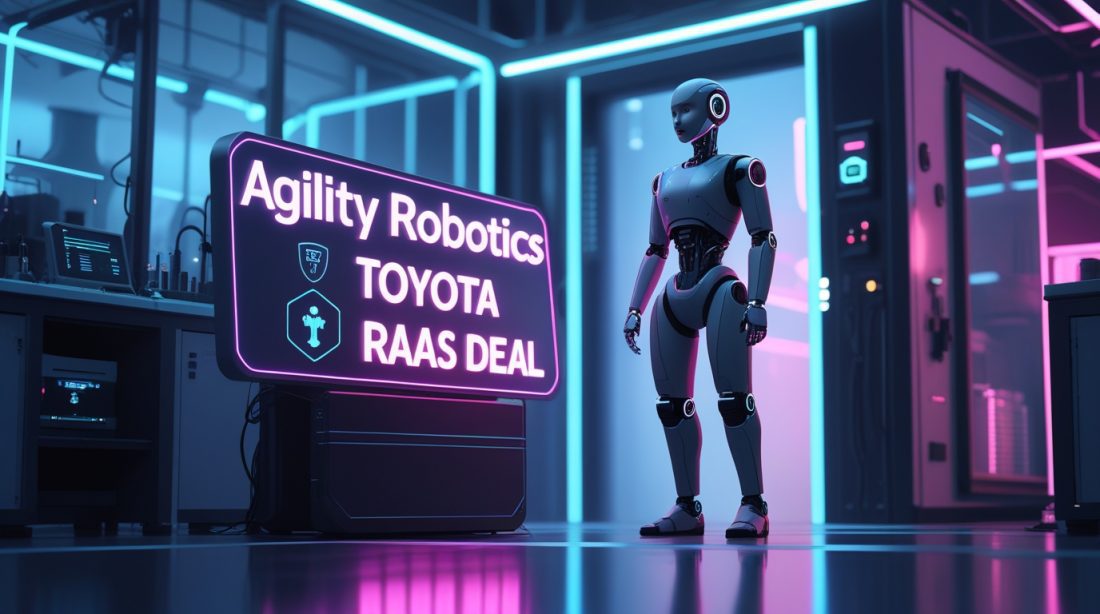
Toyota just signed the Agility Robotics Toyota RaaS deal for seven “Digit” humanoids at its Canadian RAV4 plant under a Robots-as-a-Service (RaaS) model. This isn’t about sci-fi hype; it’s about balance sheets. By shifting from CapEx to OpEx, Toyota is hedging against labor uncertainty and turning repetitive tote-moving into a predictable monthly expense. The market is responding, with the global RaaS sector projected to hit $14.56 billion by 2035. The real story? How human fear of drudgery and corporate desire for flexibility are merging into a new industrial asset class.
I remember standing on a factory line about fifteen years ago—not as an analyst, but as a summer hire. My job was to stand in the same spot for eight hours, placing part “A” into slot “B.” By day three, my wrists ached. By week two, the monotony was physically painful. That memory resurfaced when I read the news from Woodstock, Ontario. Toyota is deploying seven Digits not to replace the people standing next to me back then, but to take the slot that made my wrists hurt.
According to The Hamiltor Spectator, Toyota Motor Manufacturing Canada (TMMC) signed the deal after a year-long pilot. The task is brutally simple: unload totes of auto parts from an automated tugger. It’s a job that requires bending, walking, and precision—but zero creativity.
Why Did Toyota Choose the RaaS Model? (Decoding the Financial Shift)
The automotive industry is historically a CapEX-heavy environment. Buying a stamping press that lasts 30 years is one thing; buying a rapidly evolving humanoid robot is another. The “why” behind the Agility Robotics Toyota RaaS deal is rooted in modern treasury management.
- Preservation of Capital: By opting for Robots-as-a-Service, Toyota avoids the multimillion-dollar upfront hit. Instead, capital is preserved for core competencies—like EV development or supply chain resilience.
- Obsolescence Insurance: A robot bought in 2026 might look archaic by 2028. RaaS shifts the risk of technological obsolescence to the provider (Agility). As noted by Agility CTO Pras Velagapudi, “Cost of deployment … can be more than the price of the robot by a lot.” AI tools are critical to driving down that hidden cost .
The Human Asset: Fear, Desire, and the 8,500 Workers
To understand the value of this deal, we have to apply financial logic to human nature. Toyota employs 8,500 highly skilled Canadians at TMMC and has a pristine record of never laying off a full-time employee .
- The Fear: Worker burnout and injury. The desire of the employee is to avoid the “Toyota-itis” of the past—repetitive stress injuries that steal quality of life at 50.
- The Desire: The company desires stability. High-turnover roles (like moving totes) are a liability.
- The Leverage: By deploying Digits for “extremely repetitive and physically taxing tasks,” Toyota leverages automation to strengthen its human assets. Brendan Sweeney of the Trillium Network noted this allows workers to put their “brain to work” rather than just their backs .
Market Reality Check: The 5% Problem and the 21.2% Solution
Let’s ground this in data. Despite the hype, actual humanoid penetration in warehouses sits below 5% . Why? Because safety protocols and battery limitations are hard. However, the financial trajectory is undeniable.
According to global market insights, the global Robotics as a Service market is poised to grow at a CAGR of 21.2% through 2035, jumping from $2.57 billion in 2026 to $14.56 billion. This isn’t driven by “backflipping” robots, but by the shift from CAPEX to OPEX models. The Agility Robotics Toyota RaaS deal is a validation of this shift, moving robotics from the experimental lab to the “boring” (and profitable) factory floor.
How Robots-As-A-Service Changes the Power Dynamic
Traditionally, the leverage was held by the manufacturer who could afford the machine. RaaS flips that. It opens the door for mid-tier suppliers to access automation they couldn’t previously afford.
“After evaluating a number of robots, we are excited to deploy Digit to improve the team member experience and further increase operational efficiency.”
— Tim Hollander, President, TMMC
This quote is revealing. “Team member experience” comes before “operational efficiency.” In the psychology of industrial adoption, addressing the worker’s fear of pain is the gateway to achieving the shareholder’s desire for efficiency.
Frequently Asked Questions (Google’s “People Also Ask”)
Q: What does the Agility Robotics Toyota RaaS deal actually involve?
A: The deal involves Toyota Motor Manufacturing Canada deploying seven Agility Robotics “Digit” humanoid robots at its Woodstock, Ontario plant. They will handle logistics tasks—specifically unloading and loading totes of auto parts from automated tuggers—under a Robots-as-a-Service subscription model rather than a direct purchase .
Q: Will robots like Digit replace human workers at Toyota?
A: According to Toyota Canada spokesperson Michael Bouliane, the robots are “absolutely not” meant to replace workers. Toyota has a history of avoiding layoffs and views this as a way to relieve employees from physically taxing, repetitive tasks so they can focus on more valuable, skill-based work .
Q: What is the Robots-as-a-Service (RaaS) market size?
A: The global robotics as a service market was valued at approximately $2.21 billion in 2025. It is projected to reach $14.56 billion by 2035, growing at a compound annual growth rate (CAGR) of 21.2% .
Q: Why is 2026 a pivotal year for humanoid robots?
A: 2026 marks a shift from lab demos to commercial viability. Companies like Toyota, BMW, and Hyundai are moving past pilot phases into contracted deployments. However, analysts caution that adoption is still cautious, with barriers like battery life and safety protocols keeping actual deployment below 5% in some sectors .
Q: Who else is deploying humanoid robots?
A: Competitor Figure AI tested robots in a BMW factory, unloading 90,000 parts. Hyundai plans to mass-produce 30,000 robots annually by 2028 and is launching its own RaaS model. Other players include Apptronik, Tesla (Optimus), and Boston Dynamics .
The Digit Logic
The Agility Robotics Toyota RaaS deal is a case study in applied financial logic. It leverages the human desire for meaningful work and the corporate fear of inflexible cost structures. By treating the robot as a service, Toyota buys optionality.
The next time you see a headline about robots taking jobs, remember the 8,500 workers in Woodstock who now have a slightly safer place to work, and the seven Digits doing the job that no summer hire will ever have to dread again. This is the “why” of industrial AI—it’s not about replacing humans; it’s about financing a future where humans don’t have to move totes for eight hours a day.
Want to stay ahead of the next wave of industrial automation?
Subscribe to our newsletter for weekly analysis on RaaS, humanoids, and the financial engineering driving the factory of the future.
[Subscribe to Industrial AI Analysis]
Further Reading & Related Insights
- Hyundai Atlas Humanoid Robot Factory Deployment → Complements Toyota’s RaaS move by showing how Hyundai is scaling humanoid deployment, highlighting industry-wide adoption trends.
- South Korea Robot Density Supply Chain Risk 2026 → Provides context on how robot deployment intersects with supply chain vulnerabilities, relevant to Toyota’s financial logic in choosing RaaS.
- Industrial AI Safety Concerns 2026 → Reinforces the importance of safety and governance in humanoid adoption, echoing Toyota’s cautious integration strategy.
- Europe AI Robotics Opportunity → Expands the perspective to global opportunities, showing how RaaS and humanoid robotics are shaping industrial competitiveness beyond North America.
- Industrial AI Strategy Analysis: How Robots, Tariffs, and Human Skills Define 2026’s Competition → Connects Toyota’s RaaS deal to broader industrial strategy, emphasizing the balance between automation economics and human workforce value.