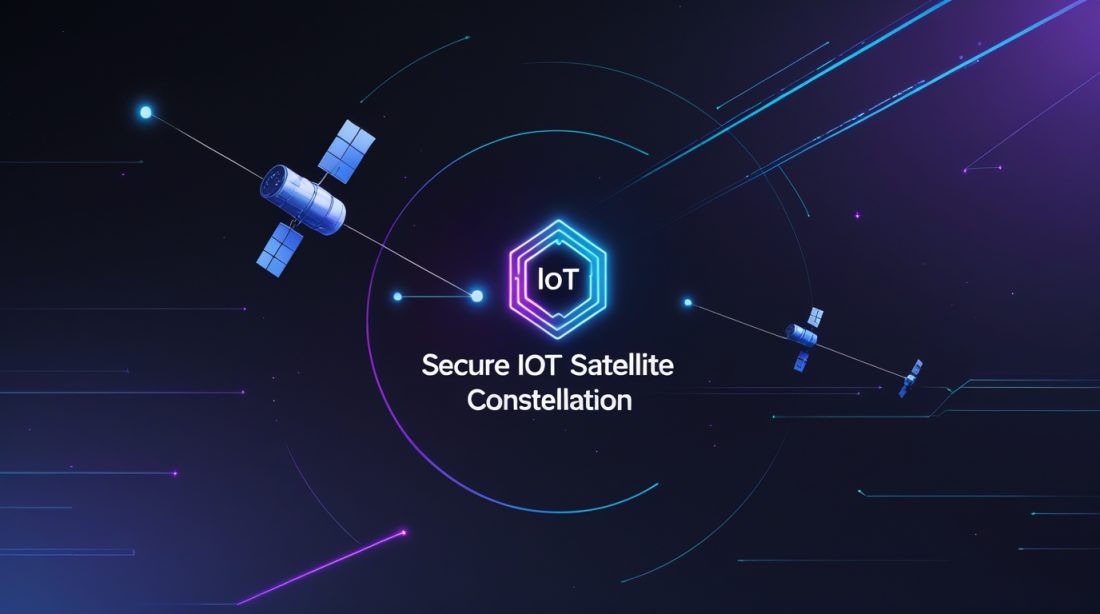
The urgent convergence of global IoT expansion and sophisticated cyber threats has created a critical infrastructure gap that terrestrial networks alone cannot fill. Announced in February 2026, the strategic partnership between WISeKey, its subsidiary WISeSat, and French launch provider Latitude marks a decisive move to address this gap by building a dedicated, secure IoT satellite constellation. This collaboration aims to deploy approximately 100 satellites by 2029, creating a sovereign data infrastructure designed from the ground up for global environmental monitoring, critical infrastructure management, and industrial IoT applications. This initiative represents a fundamental shift in how industries will secure and manage distributed physical assets in an increasingly interconnected and vulnerable world.
Why This Secure IoT Satellite Partnership Matters Now
The demand for low-latency and highly secure space-based connectivity is accelerating worldwide. IoT networks for sectors like logistics, agriculture, defense, and energy utilities are expanding into remote and off-grid locations where traditional cellular coverage is unreliable or nonexistent. Furthermore, the data transmitted from these industrial assets—such as pipeline pressure readings, grid performance metrics, or container tracking information—is increasingly mission-critical. The partnership directly responds to this need by developing an orbital architecture focused on global, cost-efficient, and highly secure connectivity.
As Carlos Moreira, CEO of WISeKey, stated, the goal is to “create a resilient and sovereign data infrastructure to support environmental, industrial, and governmental applications”. This move transcends simply providing another communication channel; it is about constructing digital infrastructure that operates at the convergence of space, cybersecurity, and IoT.
Why Quantum-Resistant Security is Non-Negotiable for Space-Based IoT
A cornerstone of the WISeSat constellation’s value proposition is its embedded cybersecurity, which addresses both current and future threats. The satellites will incorporate WISeKey’s core technologies, including quantum-resistant security protocols and strong authentication mechanisms. This is crucial because IoT devices in industrial settings often remain in operation for decades, far beyond the anticipated arrival of quantum computers capable of breaking traditional encryption.
The commitment to post-quantum cryptography (PQC) is not theoretical. In a separate proof-of-concept scheduled for mid-2026, WISeKey plans to connect its “WISeRobot” to the satellite constellation using a PQC-secured link provided by its semiconductor subsidiary, SEALSQ. This demonstrates a practical, hardware-rooted approach to future-proofing communications for long-lifetime industrial assets, ensuring the integrity and confidentiality of data from sensors to orbit and back.
Why Latitude’s Launch Capability is a Strategic Enabler
Deploying a 100-satellite constellation requires a launch partner that offers flexibility, responsiveness, and mission control. WISeSat selected Latitude and its Zephyr Launcher, a small orbital rocket designed for dedicated small satellite missions. With a payload capacity of up to 200 kg to Sun-Synchronous Orbit (SSO), the Zephyr provides a tailored access-to-orbit solution that can launch from multiple spaceports with high cadence.
This capability allows for a controlled, phased deployment aligned with customer demand and technical rollout. Adeline Pitrois, Chief Commercial Officer of Latitude, emphasized that their launcher is “designed to meet the operational and security requirements of modern IoT missions”. For industrial users, this translates into a more reliable and scalable pathway for constellation build-out, reducing the risk of deployment delays that could postpone service availability for critical monitoring applications.
From Connectivity to Autonomous Transactions: The Machine Economy in Orbit
Looking beyond basic data transmission, the partnership hints at a more transformative vision for industrial IoT. In early February 2026, WISeSat formalized a collaboration with another WISeKey subsidiary, SEALCOIN, to embed decentralized transaction capabilities directly into the satellite infrastructure.
This integration aims to enable IoT devices and satellites to authenticate, exchange data, and autonomously settle value without human intermediaries. Imagine a network of remote solar panels that can automatically purchase maintenance services via satellite, or autonomous sensors that sell environmental data directly to research institutions. As Carlos Moreira described, this approach “lays the foundation for a true machine economy, one that scales and extends trusted real machine economy not only across the planet, but beyond Earth”. This evolution from communication to transactional infrastructure could redefine operational and economic models for distributed industrial assets.
Addressing Key Industrial and Security Challenges
The table below summarizes how the WISeSat constellation is designed to address specific pain points in modern industrial IoT deployments:
| Industrial Challenge | WISeSat Constellation Solution | Key Technology Enabler |
|---|---|---|
| Lack of Global Coverage | Cost-effective satellite IoT connectivity independent of terrestrial networks. | Network of low-cost satellites in Low Earth Orbit (LEO). |
| Vulnerability to Cyber Attacks | End-to-end protected data transmission with quantum-resistant protocols. | Hardware-rooted PKI, Secure Elements, and post-quantum crypto from SEALSQ. |
| High Operational Complexity | Seamless integration with existing systems for easy deployment. | Satellite-as-a-Service model with standardized APIs and platforms. |
| Limited Asset Autonomy | Infrastructure for machine-to-machine authentication and value settlement. | Integration of the SEALCOIN decentralized transaction layer. |
Building the Analytical Backbone for a Distributed World
The partnership between WISeKey, WISeSat, and Latitude is more than a technical project; it is a strategic blueprint for the next generation of industrial infrastructure. By combining sovereign, secure connectivity with the potential for machine-driven economics, it provides a foundational layer upon which smarter grids, more resilient supply chains, and comprehensive environmental monitoring systems can be built. For industries whose physical assets are their lifeblood, this constellation offers a path to unprecedented visibility, security, and operational intelligence from anywhere on Earth.
Fast Facts
WISeKey, WISeSat, and Latitude are partnering to launch a 100-satellite constellation by 2029 to provide globally secure IoT connectivity. It uniquely combines quantum-resistant encryption, flexible launch capabilities, and machine-to-machine transaction tech to meet critical industrial needs for remote monitoring, infrastructure security, and autonomous operations.
FAQs
What makes this IoT satellite constellation different from existing satellite internet?
This constellation is specifically engineered for IoT and machine-to-machine (M2M) communications, not consumer broadband. It prioritizes security, low-power consumption, and cost-effectiveness for connecting sensors and industrial devices globally, integrating quantum-resistant cryptography directly into its architecture from the start.
How does post-quantum cryptography protect future industrial data?
Post-quantum cryptography uses new encryption algorithms designed to be secure against attacks from both classical and future quantum computers. By embedding this in satellites and chips now, industrial IoT devices deployed today will remain secure for their entire operational lifespan, protecting long-term investments in critical infrastructure.
What are the primary industrial use cases for this secure satellite network?
Key applications include global asset tracking for logistics, monitoring of remote critical infrastructure (like pipelines and grids), smart agriculture in isolated areas, and environmental sensing for climate change research. The secure link is also vital for defense and security operations.
When will the constellation be fully operational and available for commercial use?
The partnership aims for a full deployment of approximately 100 satellites by 2029. Services will likely be rolled out in phases, with initial demonstrations (like the WISeRobot connection) planned for as early as the second quarter of 2026 .
Further Reading & Related Insights
- OT Cybersecurity for AI-Driven Industrial Operations: Mitsubishi Electric Acquires Nozomi Networks → Connects directly to the theme of securing industrial IoT systems, highlighting how cybersecurity is becoming foundational for AI and IoT infrastructure.
- Nigeria Satellite IoT Licenses: How 2026 NCC is Shaping Connectivity → Complements the satellite constellation narrative by showing how regulatory frameworks in Nigeria are enabling IoT expansion via satellite.
- AT&T’s IoT Network Intelligence Platform → Provides a case study of terrestrial IoT network intelligence, contrasting with the need for secure space-based IoT connectivity.
- How to Protect Industrial IoT from Botnet Attacks → Reinforces the cybersecurity angle, showing the risks IoT networks face and why quantum-resistant protocols are critical.
- Why IoT in 2026: Regulatory Standards and Growth → Expands the context by examining global IoT regulatory standards, aligning with the article’s focus on secure, sovereign infrastructure.
Stay Ahead in Industrial Innovation: The fusion of space, security, and IoT is defining the next frontier of industrial operations. Subscribe to our newsletter for in-depth analysis on how technologies like secure satellite constellations are transforming asset management, supply chain logistics, and critical infrastructure protection. Get actionable insights delivered directly to your inbox.