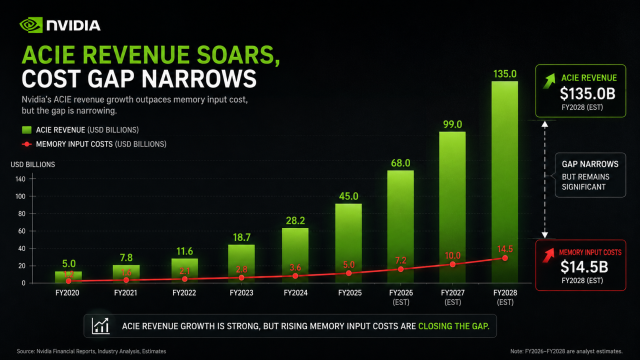
Industrial AI revenue growth in emerging markets is accelerating at a pace that demands a recalibration of traditional investment models. As of 2026, the global Industrial AI Solution market, valued at USD 863 million, is on a trajectory to reach USD 1,378 million by 2034, growing at a CAGR of 8.3%. This growth is no longer concentrated in North America or Europe; it is being decisively driven by the strategic ambitions of nations across Asia-Pacific, the Middle East, and South America.
For analysts, the critical question has shifted from if these markets will adopt industrial AI to how they are architecting entirely new competitive paradigms around it. This guide dissects the engines of this revenue expansion, the unique regional blueprints, and the emerging risks that will define portfolio performance in the coming decade.
Why 2026 is the Inflection Point for Industrial AI Revenue
The narrative for industrial AI revenue growth in emerging markets has moved from speculative potential to measurable, policy-driven reality. Two converging forces make 2026 a pivotal year. First, the global technology landscape is fragmenting. As superpowers adopt more protectionist trade policies, middle-power nations are actively positioning themselves as new economic and technological centers. This “friendshoring” and supply chain diversification is not just about moving factories; it’s about building sovereign, AI-driven industrial capacity from the ground up.
Second, there’s a fundamental maturation in the technology itself. The market is shifting decisively away from generic, off-the-shelf AI tools toward what industry experts call “industrially trained intelligence“. These are AI models and agents specifically built on operational data, engineering context, and industry-specific workflows. For emerging economies, this means they can deploy solutions tailored to local needs—such as optimizing mineral extraction or managing intermittent renewable energy grids—without being forced to adapt to Western-centric software models. This specificity translates directly into faster adoption, clearer ROI, and more resilient revenue streams for providers who can deliver it.
Fiction: Consider a mid-sized automotive parts manufacturer in Vietnam. In 2024, they piloted a generic AI tool for predictive maintenance, with mixed results due to a lack of local data context. In 2026, leveraging a government-subsidized Industry 4.0 sandbox, they deploy an AI copilot trained on regional supplier data and local machine failure patterns. The result is a 40% reduction in unplanned downtime within a quarter, a tangible outcome that fuels further investment and becomes a case study for national industry promotion.
Key Drivers Powering Revenue Expansion
The revenue growth is not monolithic; it is being propelled by a clear set of high-impact drivers that analysts must weigh.
- National Industrial Policy as a Catalyst: Unlike in mature markets where adoption is often enterprise-led, state-backed initiatives are primary growth drivers in emerging economies. China’s “Manufacturing 2025” and India’s “IndiaAI Mission” are blueprints being emulated. Brazil, for instance, has committed $23 billion over four years to its Brazilian Artificial Intelligence Plan, explicitly targeting sovereign AI stack development. These programs de-risk investment for local manufacturers through subsidies, shared testbeds, and tax incentives, directly stimulating market demand.
- The Strategic Leap to Cloud-Native & Edge AI: Many emerging markets benefit from a “greenfield advantage.” They are not burdened by decades-old legacy automation systems (a -1.9% CAGR restraint in North America and Europe). Consequently, they are leapfrogging directly to cloud-native AI platforms and edge computing architectures. Cloud-based solutions, which accounted for over 60% of the market in 2025, offer a lower upfront cost and scalability that is ideal for growing industries. Simultaneously, edge AI deployment for real-time decisions is critical in regions with unreliable connectivity, enabling real-time quality inspection and predictive maintenance directly on the factory floor.
- Solving Acute Labor and Skills Shortages: A universal pressure point is the scarcity of skilled labor. Here, AI is not a replacement but a critical multiplier. Generative AI copilots are easing engineering labor shortages by capturing the tacit knowledge of retiring experts and enabling junior technicians to perform at near-expert levels. For example, an AI agent deployed at Daikin’s factory diagnoses HVAC faults with over 90% accuracy in 10 seconds. This demonstrable productivity lift is a powerful and immediate ROI argument driving software procurement.
Table: Primary Drivers of Industrial AI Revenue in Emerging Markets
| Driver | Impact Mechanism | Example |
|---|---|---|
| Sovereign AI Policy | Direct state investment, subsidies, and national mandates create protected demand. | Brazil’s $23B AI plan; IndiaAI Mission. |
| Greenfield Edge/Cloud Leap | Bypassing legacy system costs allows faster deployment of scalable, modern AI stacks. | Adoption of cloud-native AI suites in Latin America. |
| Labor Productivity Multiplier | AI copilots address acute skills gaps, providing clear, rapid operational ROI. | Daikin-Hitachi AI agent for fault diagnosis. |
| Supply Chain Resilience | AI-driven logistics and inventory optimization mitigate volatility from shifting trade policies. | Use of AI for “tariff-proof” supply chain agility. |
Regional Analysis: Contrasting Blueprints for Growth
The path to industrial AI revenue growth in emerging markets varies dramatically by region, reflecting distinct industrial bases and policy goals.
- Asia-Pacific: The Established Speed Leader: APAC is not just growing; it’s setting the pace, with a projected CAGR of 20.55% through 2031. It already holds a 42% share of the global Industrial AI Solution market. China’s strategy is multifaceted, combining state investment with a push to become a robotics powerhouse. Its humanoid robotics sector alone is projected to explode from $380 million in 2024 to $1.4 billion by 2026. Meanwhile, Japan focuses on precision and quality, piloting AI-augmented robotics for near-zero downtime manufacturing. Southeast Asian nations like Vietnam and Thailand are becoming key beneficiaries of diversified supply chains, investing in AI to upgrade their manufacturing ecosystems.
- The Middle East & Africa: From Extraction to Optimization: The Gulf Cooperation Council (GCC) states are pivoting their oil and gas wealth into long-term AI infrastructure. Saudi Arabia and the UAE are making billion-dollar investments in sovereign data centers and AI talent, aiming to become regional hubs. The application focus is sharp: optimizing refinery throughput, predictive maintenance for energy infrastructure, and smart city management. In Africa, adoption is emerging in mining and logistics, often through partnerships between local industries and global technology providers.
- South America: Sovereignty and Sustainability: Brazil is the anchor for the region, with its massive AI investment plan. The driver is a blend of economic sovereignty and resource management. AI is being deployed to optimize complex agricultural supply chains, manage renewable energy assets like hydropower, and add value to mining and extraction processes. The region shows a keen interest in leveraging AI for sustainability—optimizing resource use and reducing waste—which aligns with global export standards.
Navigating the Unique Risk Landscape
Pursuing industrial AI revenue growth in emerging markets is not without its distinct set of challenges that can impede ROI and scalability.
- The Talent Chasm: The most cited barrier is the scarcity of OT-AI integration talent. Industrial AI requires a rare hybrid of operational technology (OT) knowledge and data science skills. This gap is more acute in emerging markets where the digital education pipeline is still developing. As noted by Hitachi’s plan to upskill 50,000 staffers, the solution requires massive corporate and governmental investment in continuous, applied training programs.
- Data Governance and Sovereignty Hurdles: While sovereign AI is a goal, the path is complex. Regulations around data residency and protection are evolving rapidly. The EU AI Act, with its high-risk categorizations and audit mandates, has a spillover effect, influencing standards globally. Multinationals operating in these markets must often build costly, sovereign cloud instances to comply, which can inflate project costs and slow deployment.
- Infrastructure and Economic Volatility: Underlying digital and physical infrastructure can be inconsistent. Furthermore, these markets are often more exposed to global macroeconomic swings, currency volatility, and geopolitical tensions. As the Allianz Risk Barometer 2026 notes, while the AI investment narrative is strong, “elevated expectations also heighten vulnerability” to any sudden economic shift.
The Future Outlook: From Automation to Autonomous Operations
The next phase of industrial AI revenue growth in emerging markets will be defined by the transition from assisted to autonomous operations. The pioneers are already showcasing this future. Hyundai’s Metaplant in the U.S., a benchmark for global operations, features end-to-end AI optimization from order intake to production, with real-time anomaly detection and automated corrections. In Japan, ENEOS and Preferred Networks have begun the world’s first AI-based autonomous operation of a crude oil distillation unit.
This evolution requires a foundational change in thinking. As Boris Scharinger of Siemens Digital Industries frames it, it’s the shift from task-based optimization to “Business Process Reengineering 2.0,” where organizations redesign core workflows from the ground up with AI as an embedded component. For analysts, the key metric will evolve from simple software license revenue to the value captured from these re-engineered, autonomous industrial processes.
FAQ: Industrial AI Revenue in Emerging Markets
- What is the single biggest driver of AI adoption in emerging market manufacturing?
While efficiency is key, the most powerful driver is national industrial policy. Governments in Brazil, India, Saudi Arabia, and China are making multi-billion-dollar sovereign investments in AI infrastructure and talent, directly funding pilot programs and creating favorable conditions for local industry adoption. - How does the challenge of legacy systems in emerging markets compare to developed economies?
It’s a double-edged sword. Emerging markets often have less integrated legacy automation, which is a -1.9% CAGR restraint in the West. This allows them to “leapfrog” directly to modern, cloud-native AI platforms, accelerating deployment. However, they may lack the foundational digital data historians and connectivity needed to feed AI models effectively. - Are emerging markets focusing on generative AI for industry?
Yes, but with a distinct focus. While generic chatbots have limited use, generative AI copilots trained on local equipment manuals, maintenance logs, and regional supply chain data are proving invaluable. They address acute skills shortages by enabling less experienced workers to perform complex troubleshooting and planning tasks. - What is the biggest risk to the projected revenue growth in these regions?
Beyond talent, the largest risk is fragmentation and sovereignty costs. As countries enact strict data residency laws (influenced by regulations like the EU AI Act), the cost and complexity of deploying integrated global AI solutions increase. Companies may need to build duplicate, country-specific infrastructure, which could slow scaling and impact margins.
Fast Facts
Industrial AI revenue in emerging markets is exploding, driven by sovereign national strategies (like Brazil’s $23B plan) rather than just corporate spending. Asia-Pacific leads with 20%+ CAGR, but the Middle East and South America are building unique AI-powered industries. Success hinges on providing “industrially trained” AI—not generic tools—that solve acute local problems like skills gaps and supply chain volatility. The major risks are a severe shortage of OT-AI hybrid talent and the rising cost/complexity of complying with diverse data sovereignty rules.
Further Reading & Related Insights
- Strategic AI Infrastructure Investment → Connects directly to the theme of foundational investments driving industrial AI adoption in emerging markets.
- AI Revenue Booster: Nigeria Oil & Gas Operations → Highlights a regional case study of AI driving industrial ROI, aligning with the article’s focus on sector-specific adoption.
- Predictive Grid Management in Nigeria: How Digital Twins Can Recover ₦10.5 Trillion in Industrial Losses → Reinforces the importance of industrially trained AI solutions tailored to local infrastructure challenges.
- Historic Surge: AI Semiconductor Revenue Drives Industry Past $1 Trillion in 2026 → Provides global context on how semiconductor demand underpins industrial AI growth worldwide.
- SingularityNET’s Industrial AI Marketplace Surge → Explores how industrial AI ecosystems are monetized, complementing the emerging market revenue expansion narrative.
Stay Ahead of the Industrial Shift. The convergence of geopolitics, sovereign AI, and next-generation automation is reshaping global manufacturing at an unprecedented rate. For ongoing, in-depth analysis of these trends—from regional market forecasts to deep dives on agentic AI—subscribe to the CreedTec Insights newsletter. Receive exclusive commentary, expert interviews, and strategic frameworks delivered directly to your inbox.
Subscribe to CreedTec Insights