The dramatic implosion of Thinking Machines Lab—a $12 billion AI startup torn apart by internal power struggles and scandal—has quickly become the Thinking Machines Lab scandal, and it is more than just Silicon Valley gossip. It is a stark signal that the era of hype-driven valuation is colliding with the hard requirements of industrial-scale execution.
As one of 2026’s first major tech scandals, the firing of co-founder Barret Zoph and the exodus of founding talent back to OpenAI underscores a critical inflection point: the market is pivoting from potential to provable, scalable value, especially in industrial applications. For industrial leaders watching this saga, the message is clear. Sustainable advantage will come not from who has the most charismatic founders or the largest seed round, but from who can integrate AI into the physical and operational fabric of their business with discipline and clear-eyed purpose.
Fast Facts
The dramatic firing of a co-founder at the high-flying AI startup Thinking Machines Lab—now widely viewed as part of the Thinking Machines Lab scandal—is a symbolic event for 2026, highlighting a market-wide shift. Industrial AI success now depends on robust data foundations, measurable ROI, and the rise of “super agents” for autonomous operations, moving decisively beyond proof-of-concept hype toward scaled, value-driven implementation.
The Startup Soap Opera: What Really Happened at Thinking Machines Lab?
In January 2026, Silicon Valley was riveted by a classic tale of ambition, secrecy, and corporate implosion. Thinking Machines Lab, a startup launched by former OpenAI CTO Mira Murati and valued at a staggering $12 billion, began to publicly unravel. The catalyst was the firing of co-founder and CTO Barret Zoph. According to reports, CEO Mira Murati confronted Zoph after learning of an undisclosed romantic relationship he had with a junior colleague, a relationship that began while both were at OpenAI.
The personal drama quickly escalated into a battle for control. Zoph, along with two other colleagues, later confronted Murati in a meeting, challenging the company’s direction and pushing for Zoph to be given greater technical authority. Murati resisted, citing concerns about Zoph’s engagement. The fallout was rapid: Zoph was dismissed, and within a short period, three of the startup’s six original founders had departed, with several, including Zoph, returning to OpenAI. For a company that had raised a record $2 billion seed round, the rapid loss of its founding brain trust was a devastating blow, revealing the fragility beneath even the most lavishly funded AI ventures.
Why This Startup Implosion Matters for Industrial AI
This spectacle is not an isolated incident but a symptom of a broader market correction. The “soap opera” reflects the end of an era where narrative and pedigree could command billions. In 2026, the question has decisively shifted from “What can your AI do?” to “What measurable value does it deliver, and at what scale?” For industrial sectors—manufacturing, energy, logistics—this shift is paramount.
The Foundation Gap: Industrial AI’s promise of billions in value is real, but it is exclusively reserved for organizations that have done the unglamorous work of building a robust data foundation. A startup culture built on rapid iteration and hype is often ill-equipped for the rigorous, long-term task of contextualizing decades of fragmented operational data from legacy systems. As Cognite’s Girish Rishi notes, “AI is only as effective as the data foundation beneath it”. The drama at Thinking Machines Lab symbolizes a culture clash between Silicon Valley’s “move fast” ethos and the disciplined, foundational requirements of industrial transformation.
The Rise of the AI-Native Platform: The industrial tech stack itself is being disrupted. Legacy systems are giving way to integrated, AI-native platforms designed from the ground up to support advanced workflows and agent-based systems. Success is no longer about deploying a single clever model; it’s about building a system of intelligence. As Gabe Goodhart of IBM states, “The competition won’t be on the AI models, but on the systems… Whoever nails that system-level integration will shape the market”. A startup in turmoil lacks the stability and strategic focus required to build and sell such complex, mission-critical systems to global industrials.
Beyond the Drama: The 2026 Industrial AI Trends Defining Real Value
While startups grapple with internal chaos, the industrial AI sector is marching toward tangible, autonomous value. The trends for 2026 point to a future less about flashy demos and more about silent, efficient operation.
- The Agentic Leap: AI is evolving from an analytic tool to an active participant. Agentic AI will begin to autonomously diagnose failures, initiate corrective actions, and coordinate responses across facilities. Chris Hay of IBM predicts the rise of the “super agent,” a cross-functional system operating across multiple environments, fundamentally changing human roles from operators to overseers.
- The Inference Economy: The dominant cost of AI is shifting from training models to running them continuously in production—a process known as inference. By 2026, inference could represent 70-80% of total AI compute costs. This makes efficiency, edge deployment, and hardware-aware models critical, favoring organizations with the infrastructure and foresight to optimize for continuous operation rather than one-off experiments.
- Human-AI Collaboration as a Core Competency: The most significant competitive advantage will not be AI alone, but the system of effective human-AI collaboration. This requires new workflows, training, and trust models. Ismael Faro of IBM Research describes a move from “vibe coding” to an “Objective-Validation Protocol,” where humans define goals and validate outcomes while agent swarms execute.
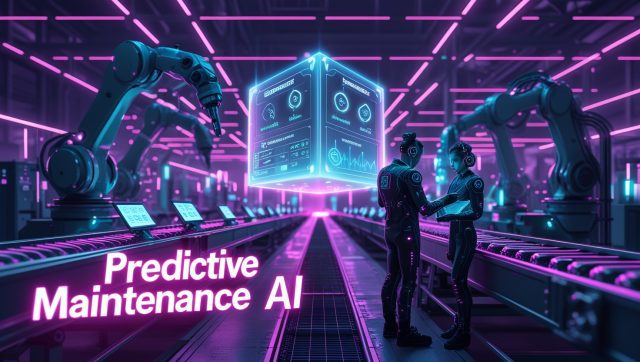
A Fictional Anecdote for Illustration: Imagine a contrast. At a buzzy AI startup, founders debate control while burning through capital. Meanwhile, at a century-old chemical plant, a quietly deployed AI agent analyzes real-time sensor data, predicts a pump failure 48 hours in advance, autonomously generates a work order, and schedules a maintenance crew—all without human intervention. The pump is fixed during a planned downtime. The story never makes the news, but it saves $2 million in lost production. This is the unglamorous, high-value reality of industrial AI in 2026.
Key Financial Signals: The Money Follows Value
The strategic pivot is already visible in financial results. Tata Consultancy Services (TCS), for instance, reported that while its overall revenue growth was modest, its annualized AI services revenue surged 17.3% quarter-over-quarter to $1.8 billion. CEO K Krithivasan stated this reflects “the significant value we provide to clients through targeted investments across the entire AI stack”. This demonstrates where enterprise budgets are flowing: toward partners who can deliver full-stack, ROI-focused implementation, not toward speculative startups.
Practical Takeaways for Industrial Leaders
For executives in manufacturing, energy, and heavy industry, the lessons are operational, not theatrical.
- Audit Your Data Foundation First: Before pursuing any advanced AI agent, conduct a clear-eyed assessment of your data contextualization and infrastructure. Value will be inaccessible without this.
- Demand Production-Ready Benchmarks: When evaluating AI solutions, insist on proof points tied to your P&L—throughput, yield, downtime, energy efficiency. Move beyond flashy demos to proven, scalable deployment frameworks.
- Design for Human-in-the-Loop: Plan your organization around new human roles of oversight, strategy, and exception handling. Invest in change management and training to build trust in collaborative AI systems.
- Prioritize Inference & Operational Efficiency: Choose partners and architectures that optimize for the long-run cost of continuous inference, not just the one-off cost of a pilot.
FAQ: Navigating the New AI Landscape
- What does “agentic AI” mean for my factory floor? It means AI systems that can autonomously execute multi-step tasks. For example, an agent could detect an anomaly, diagnose its root cause in the maintenance manual, check parts inventory, and generate a prioritized work order—all before a human operator is alerted.
- We have legacy systems. Are we too late for industrial AI? No, but your path is different. Start with high-value, contained use cases that can demonstrate ROI. Use these wins to fund the gradual modernization of your data infrastructure, treating it as a strategic business enabler, not just an IT project.
- How do we measure the ROI of an AI agent? Tie metrics directly to operational outcomes: mean time between failures (MTBF), overall equipment effectiveness (OEE), reduction in quality defects, or energy consumption per unit produced. The goal is to move from “cost center” to “value driver” on the balance sheet.
The Silicon Valley soap opera will continue, but the real transformation is happening elsewhere. It’s in the global factories, refineries, and power grids where AI is being woven into operations with a focus on resilience, efficiency, and quantifiable return. This is the definitive trend of 2026: the convergence of disciplined execution and intelligent automation.
Further Reading & Related Insights
- Industrial AI Strategy Analysis: How Robots, Tariffs, and Human Skills Define 2026’s Competition
Broadens the strategic context, showing how industrial AI success now depends on execution discipline, workforce integration, and system-level thinking—not startup hype. - AI Bubble Narrative vs Industrial AI ROI
Directly complements the article’s thesis by examining why inflated AI narratives are collapsing under the demand for measurable, production-grade returns. - Managing Orphaned AI Models: The Hidden Industrial Risk
Explores a common failure mode in hype-driven AI efforts, reinforcing why governance, lifecycle management, and long-term ownership matter in industrial deployments. - How Human-in-the-Loop Workflows Save Millions
Supports the article’s emphasis on disciplined execution and human–AI collaboration as a core competency, not an afterthought. - 7 Reasons Why Industrial AI Ghosting Is Costing Manufacturers Millions in 2025
Extends the cautionary lesson of the Thinking Machines Lab scandal into real-world industrial consequences when AI initiatives fail to scale or sustain value.
Stay ahead of the real trends transforming the industry. Subscribe to the CreedTec newsletter for monthly, in-depth analysis on practical AI deployment, exclusive case studies from the front lines of industrial transformation, and strategic insights you won’t find in the headlines