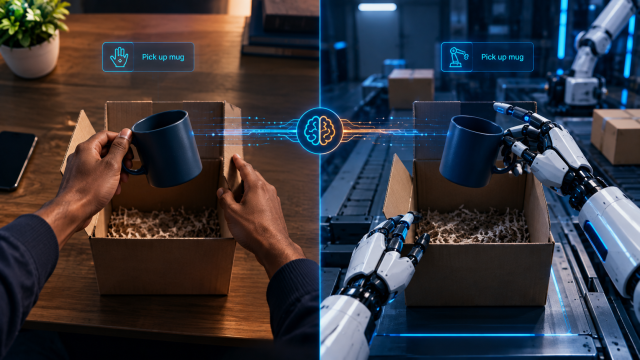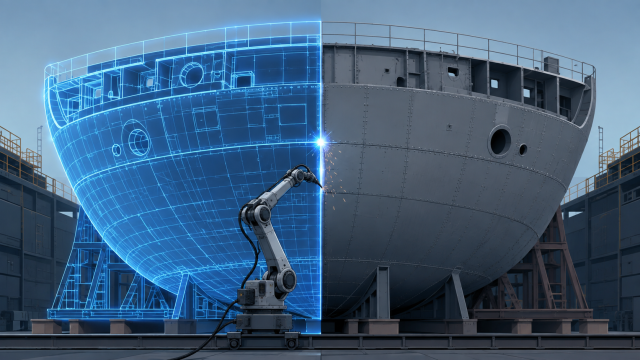
The most significant shift in industrial and defense capability is no longer about building better hardware, but about mastering simulation and training technologies in the virtual world first. The convergence of artificial intelligence, immersive reality, and computational modeling is turning simulation from a preparatory tool into the primary engine for innovation and operational readiness. This shift is on full display at UMEX & SimTEX 2026 in Abu Dhabi, an event that has ballooned to become the world’s largest dedicated to unmanned and autonomous systems, running from January 20-22 under the patronage of His Highness Sheikh Hamdan bin Mohamed bin Zayed Al Nahyan.
The event’s record scale—with over 387 exhibitors from 39+ countries—is not merely a show of force. It is a direct reflection of a surging market. The global simulation sector is projected to skyrocket from $72.44 billion in 2024 to $172.33 billion by 2033. This explosive growth is fueled by a hard economic truth: virtual validation slashes costs and time. Companies save an estimated $2,500 per employee through virtual training, and AI-powered design tools can reduce product development cycles by thousands of hours.
This analysis argues that UMEX & SimTEX 2026 is a critical indicator of a broader industrial transformation. We are moving from an era of physical prototyping and live training—with its inherent risks, costs, and delays—to a paradigm of intelligent simulation, where AI-driven models and immersive environments enable safer, faster, and more innovative development cycles across defense, aviation, manufacturing, and smart cities.
From Checkbox to Strategic Core: The New Role of Simulation
Traditionally, simulation served as a final validation step, a box to check before committing to physical production or live training exercises. This paradigm was limited by computational power and static models. Today, simulation and training technologies have moved to the center of the strategic workflow, becoming dynamic environments for exploration, optimization, and continuous learning.
- AI-Powered Predictive Design: Tools like Ansys SimAI and Altair PhysicsAI use machine learning surrogates trained on historical simulation data. They can predict complex outcomes—like stress points or fluid dynamics—10x to 1000x faster than traditional solvers. This allows engineers to explore thousands of design variations in the time it once took to validate a single one, transforming simulation from a bottleneck into a generative design partner.
- Closing the Reality Gap with Data: The most advanced systems, such as those from Monolith AI, focus on integrating real-world test data with virtual models. This “ground truth learning” closes the accuracy gap, and their AI can recommend the most valuable next physical test, reducing redundant testing by up to 70%.
- Operationalizing Knowledge: This is critical for workforce development. With a significant skilled-worker shortage looming, Operator Training Simulators (OTS) are essential for capturing expert knowledge and accelerating proficiency. Studies indicate 60% of construction accidents happen in an employee’s first year, underscoring the need for high-fidelity, risk-free training.
Why This Shift Is Accelerating Now
The convergence of three factors explains the timing of this event’s prominence. First, computational democratization through cloud-native platforms makes high-fidelity simulation accessible without supercomputer investments. Second, regulatory and safety pressures are mounting; for instance, unintentional human error contributes to 42% of unplanned process industry shutdowns, making fail-safe virtual training a compliance and economic necessity. Third, the strategic focus of nations like the UAE on smart autonomy creates a perfect launchpad for these technologies, as seen with Abu Dhabi’s Integrated Transport Centre partnering as the Regulatory Mobility Partner for the event.
The UMEX & SimTEX 2026 Ecosystem: A Market in Microcosm
Walking the floors of the ADNEC Centre Abu Dhabi provides a snapshot of the entire simulation and training value chain. The event is structured to reflect the dual-use nature of these technologies, split between defense and commercial spheres.
Defense & Security (UMEX): Here, the focus is on mission readiness and technological advantage. The concurrent International Defence Conference (IDC), themed “Smart Horizons: Redefining Defence Through Intelligent Autonomy,” sets the tone. Exhibits and live demonstrations at venues like Tilal Swaihan showcase integrated unmanned systems, where AI-driven drones and autonomous vehicles are tested in complex, coordinated scenarios. The A2RL Drone Challenge returns, pitting top AI teams against each other in high-speed autonomous racing, pushing the limits of real-time decision-making and control.
Commercial & Civilian Solutions (SimTEX & UMEX Commercial Zone): This sector highlights tangible industrial applications. You see companies like Joby Aviation displaying air taxis slated for UAE operations in 2026 and LODD Autonomous demonstrating heavy-lift cargo drones. The Abu Dhabi Agriculture and Food Safety Authority showcases how drone swarms and AI analytics enable precision farming. This zone answers the “why” for businesses: deploying these technologies enhances efficiency, cuts costs, and improves safety.
“These innovations are poised to transform industries such as smart agriculture, healthcare, logistics, and infrastructure over the coming decades,” notes an ADNEC Group press release, framing the event as a preview of the next 20 years of technological integration.
The Hard Metrics: Economic Impact of Advanced Simulation
Beyond the prototypes and demos, the investment is driven by compelling financial and operational returns. The simulation market’s growth is anchored in quantifiable benefits that resonate with any industrial analyst:
Market Traction:
- The global simulation market is on a steep growth curve, expected to grow at a CAGR of 11.44% through 2033.
- Virtual Reality (VR) simulators alone command over 37.5% of the market, generating $8.67 billion annually from medical, aviation, and military training.
Sector-Specific Impact:
- Manufacturing & Aerospace: Boeing’s use of simulation for assembly line optimization has led to reported operational savings in the realm of $12.3 billion. AI-enhanced digital twins at companies like Toyota and GE have achieved $892 million in operational cost reductions.
- Healthcare: Medical simulation training is linked to reducing procedural errors by an estimated 42,000 incidents yearly.
- Training Efficiency: AI-driven training simulators can cut learning costs by up to 40% and shorten training time by nearly 50%.
These figures illustrate that simulation is no longer an IT cost center but a strategic asset with a clear and powerful return on investment.
Future Trajectory: Where Intelligent Simulation Leads
The trajectory pointed to by UMEX & SimTEX 2026 is clear. We are moving toward Generative Engineering environments. In this near-future state, human engineers will define core problems and parameters, and an integrated AI stack will autonomously generate, simulate, optimize, and validate legions of potential solutions. Simulation will become less about human-led analysis and more about managing AI-driven creative processes.
Furthermore, the rise of the Executable Digital Twin—a concept highlighted by platforms like Siemens Simcenter X—is pivotal. These are AI-reduced simulation models that can run in real-time on machine controllers, acting as “virtual sensors” to predict failure or optimize performance continuously. This moves simulation from the design lab onto the factory floor and into critical infrastructure, enabling predictive maintenance and adaptive control.
The ultimate implication is that dominance in sectors from autonomous transportation to advanced defense will belong to those who best master the virtual continuum. The ability to rapidly iterate, train, and certify systems in sophisticated digital environments will determine the pace of innovation and operational superiority.
FAQ: UMEX, SimTEX, and Simulation Technologies
What is the main difference between UMEX and SimTEX?
UMEX (Unmanned Systems Exhibition) focuses on the physical hardware, AI, and robotics of unmanned and autonomous systems for defense and commercial use. SimTEX (Simulation and Training Exhibition) is dedicated to the software, virtual environments, and technologies used to design, test, and train operators for those systems. They run concurrently as complementary events.
How is AI currently transforming simulation?
AI transforms simulation in two key ways. Physics AI uses deep learning to predict outcomes like stress or airflow thousands of times faster than traditional solvers. Engineering AI acts as an automated co-pilot, setting up models and troubleshooting using natural language, which drastically reduces manual setup time and expertise barriers.
What industries benefit most from advanced simulation training?
High-stakes, high-cost, and high-risk industries see the most immediate benefit. This includes aviation (pilot training), healthcare (surgical simulation), energy (plant operator training), military (combat readiness), and advanced manufacturing (robotics and process optimization).
Why is the simulation market growing so rapidly?
Growth is driven by the convergence of AI/ML integration, the rise of cloud computing (enabling access to powerful simulation without heavy hardware), stringent safety and compliance regulations, and the pressing need to reduce physical prototyping costs and accelerate time-to-market across nearly all engineering-driven sectors.
Fast Facts
UMEX & SimTEX 2026 in Abu Dhabi is more than a trade show; it’s a live demonstration of a major industrial shift centered on advanced simulation and training technologies. The event highlights how these AI-powered and immersive systems have moved from a niche support tool to a central strategic asset. Driven by massive economic benefits—like cutting training costs by 40% and reducing product development cycles by thousands of hours—these technologies are reshaping defense, aviation, manufacturing, and logistics. Mastery of the virtual world is becoming the primary determinant of real-world innovation and operational advantage.
Further Reading & Related Insights
- Robotics Simulation Is Now Replacing Physical Prototyping → Directly extends the article’s core argument that virtual environments are becoming the primary engine for design, testing, and validation before real-world deployment.
- Sim-to-Game-to-Real: The Hidden Shift in Robotics → Explores the same paradigm highlighted at UMEX & SimTEX, where AI models are trained in simulated and game-like environments before transitioning into physical systems.
- AGIBots: Open-Source Robotics Simulation Platform → Adds depth on open simulation ecosystems, reinforcing how simulation platforms are accelerating experimentation, collaboration, and autonomous system development.
- How MIT Is Scaling Robot Training Data With Generative AI → Supports the training-data and AI-learning dimension, showing how synthetic and simulated data are overcoming real-world data scarcity.
- Why Domain Randomization in Industrial Robotics Is the Secret Weapon Behind Smarter, More Resilient Automation → Complements the article’s focus on closing the reality gap between virtual models and physical deployment.
Stay Ahead of the Curve. The transition to intelligent simulation is accelerating. Subscribe to our newsletter for monthly analysis on how AI and digital twin technologies are transforming industrial operations, plus exclusive insights into upcoming events shaping the future of engineering and defense.
Subscribe Now